Crystal had always been articulate. She could speak with conviction, quote wisdom, and inspire others with her words. In her community, she was known for her eloquence—her ability to “talk the talk.” People admired her insights, her clarity, her declarations of truth. But beneath the surface, Crystal carried a quiet ache. She knew her words outpaced her walk.
She could say “forgiveness matters,” but held grudges that hardened over time. She could speak of patience, but snapped when things didn’t go her way. She could preach unity, but secretly judged those who didn’t think like her. Her talk was polished. Her walk was patchy.
One day, after a particularly tense conversation with a friend who challenged her, Crystal found herself standing in front of an old mirror in her home. It was a full-length looking glass, the kind that didn’t flatter or distort. She stared at her reflection—not just at her face, but at her posture, her eyes, her presence. And she whispered, “Is this who I say I am?”
That moment marked a shift.
Crystal began to walk differently—not perfectly, but intentionally. She stopped using words as shields and started using silence as a tool for self-reflection. She apologized more. She listened longer. She chose actions that matched her values, even when no one was watching.
People noticed. Not because she made announcements, but because her presence changed. Her integrity became visible. Her consistency became magnetic. She no longer had to convince anyone of who she was—her life did the talking.
Crystal learned that talking the talk is about expression. Walking the walk is about embodiment. And the space between the two is where transformation lives.
We live in a world overflowing with words. Promises, declarations, affirmations, and public statements roll off tongues with ease. But words without embodiment are like seeds scattered on concrete—they make noise when they fall, but they never take root.
Talking the talk is easy. It costs nothing to say what we believe, what we value, or what we intend to do. But walking the walk—that’s where the real work begins. That’s where character is shaped, trust is built, and transformation becomes visible.
The gap between speech and action is where many of us struggle. We mean well, but meaning well is not the same as living well. We declare patience, but snap under pressure. We preach compassion but withhold forgiveness. We speak of unity but cling to division.
When our words and actions don’t match, something inside us knows. Integrity becomes unsettled. Relationships weaken. Our credibility thins. And the younger generation—watching us more closely than we realize—learns to doubt what adults say.
Walking the walk doesn’t require perfection. It requires presence. It asks us to slow down, notice ourselves, and choose alignment one decision at a time. It’s the quiet consistency of living that we claim to value.
Anyone can talk the talk. But the ones who walk the walk—even imperfectly—become living invitations. They don’t have to announce their values; their lives reveal them.
In the end, the world doesn’t need more speeches. It needs more examples. And each of us has the power to become one.
None of us perfectly talks the talk and walks the walk. However, occasionally, we encounter people who come close, and it’s inspiring to witness their character in action. These individuals live in alignment; they say what they mean and mean what they say. Their words and actions are consistent, their presence is steady, and their integrity is clearly visible.
People like that have always been my favorite. Being around them forces you to confront yourself. You will either appreciate them or love them because if you choose to stay in their company, they will keep you honest. If you can’t face the truth—if you prefer denial, wearing masks, or seeking comfort over clarity—you won’t remain in their presence for long. We’ve all experienced this at some point, trying to walk the walk and talk the talk, while growing into the person we claim to be.
I remember taking a personality assessment in college. My advisor, who understood me well, looked at my results and said, “This isn’t you—this is who you want to be.” She was right. My answers reflected my inner desires rather than my actual lived reality. I had subconsciously selected traits I admired, traits I hoped to embody, and traits I wanted to project—traits that didn’t yet align with how I was living. The introverted part of me longed to become that version of myself, but I hadn’t fully developed into her yet.
It wasn’t until I married my first husband, a war veteran, that I truly began to understand the importance of aligning my words and actions. He was as genuine as they come. He often told me, “You talk a good game, but you don’t walk the walk.” At first, I didn’t fully grasp the meaning of his words. However, living with someone who embodies such authenticity made it impossible not to rise to that standard. Through the experiences we shared, I learned what he meant, and gradually, I became the kind of person who lived according to her words.
Life shapes who we are. Our experiences can either strengthen us or break us, and through this process, our character develops. Some people are raised to walk with integrity, while others learn it through hardship. Some are still in the process of becoming who they aspire to be, and some never achieve it.
Reflecting Back
The phrase “talking the talk and walking the walk” illustrates the concept of alignment—specifically, the often challenging journey between our stated beliefs and our actual behavior. My examples highlight something important: alignment is not something we are born with, nor does it happen automatically. It is developed through real-life experiences, shaped by the people who challenge us, the truths that confront us, and the moments that prevent us from hiding.
Some people grow up in homes where integrity is modeled daily. Others, like me, discover it through relationships that reflect their true selves. Then there are those who only become aware of this gap when life reveals it—when the version of themselves they describe no longer aligns with the person they actually are.
My college assessment gave me a glimpse of that gap: the self I wanted to be versus the self I was still becoming. My marriage to a man who lived with raw integrity pushed that gap into the light. And my willingness to grow—slowly, imperfectly, courageously—closed it.
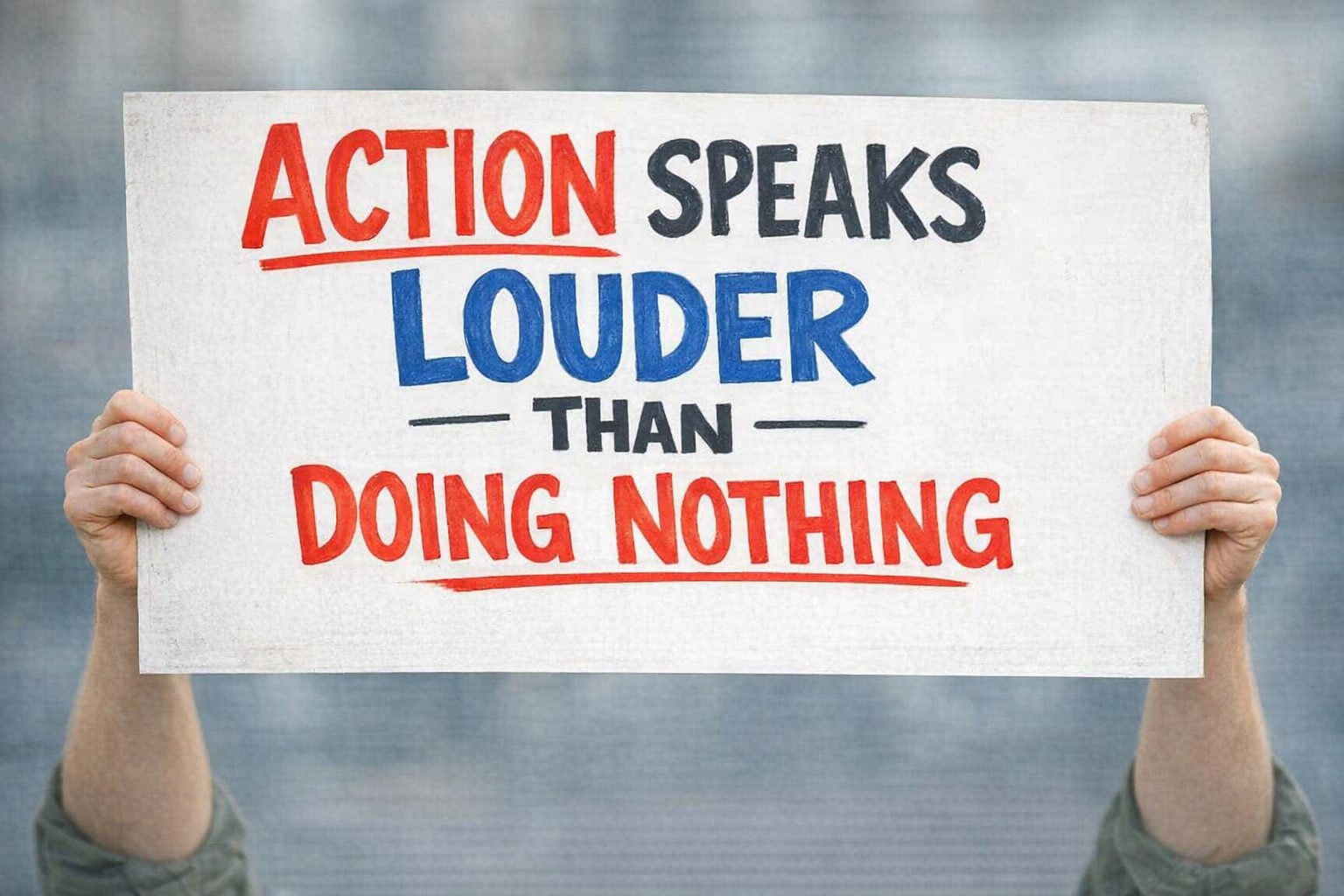
That’s the heart of walking the walk. It’s not perfection. It’s progression.
It’s the moment you stop admiring the traits you circled on a test and start embodying them in real time. It’s the shift from wanting to be authentic to choosing authenticity, even when it costs you comfort. It’s the quiet, daily decision to let your actions speak for you.
The truth is, most people never make that shift. Some stay in the realm of words—eloquent, expressive, full of intention but short on embodiment. Others step into the work of becoming, letting life refine them until their walk finally matches their talk.
My story shows that becoming is possible. That alignment is learned. My message invites others to ask themselves the same question I had to face:
Are you living the truth you speak? Or are you still speaking the truth you hope to live?
During the Spring and Autumn seasons, one of my favorite ways to spend time shopping is a day excursion to the charming historic Main Street districts scattered throughout Maryland. Each visit feels like a small adventure—an opportunity to support local businesses, discover unique treasures, and immerse myself in a community’s character.
Stepping into each shop is like entering a new world. Though they sit just steps apart, every store has its own personality, its own story to tell. That’s what makes the experience so meaningful. The warmth and individuality of these spaces make shopping something deeper—personal.
The shops line both sides of Main Street, inviting passersby with colorful facades, flower baskets, and welcoming windows. I rarely have time to visit every business in one trip, so I always leave with a mental note of the ones I’ll explore next time. After hours of browsing, my heart feels full—and my feet need a break. That’s when I pause at a cozy café or restaurant for lunch, often with a small purchase already in hand to enjoy along the way.
But this isn’t just about shopping. It’s about the joy of discovery. Each Main Street across Maryland offers its own blend of history, scenery, and spirit. I love traveling to the different Main Street counties to observe the subtle differences and surprising similarities. Whether it’s the cobblestone charm of Ellicott City, the waterfront elegance of Annapolis, or the artistic energy of Frederick, each location leaves its own impression.
Some of my favorite stops include:
Ellicott City (Howard County)
Annapolis (Anne Arundel County)
Frederick (Frederick County)
Chestertown (Kent County)
Berlin (Worcester County)
Havre de Grace (Harford County)
Talbot County and others
I enjoy photographing the streets, admiring the architecture, and soaking in the atmosphere. But most of all, I treasure the feeling of being part of something local, something rooted. Each shop I visit is a thread in the fabric of Maryland’s small-town charm—and every shopping spree becomes a story worth remembering.
1. Personalizing systemic failure harms the patient, not the system
My initial reaction—feeling dismissed, devalued, and invisible—is deeply human. But the lesson I draw is that taking a systemwide breakdown personally only injures one’s own health. The system does not feel your anger; your body does. Recognizing this protects your emotional and physical well‑being.
2. The healthcare system is overwhelmed, and individual doctors are caught inside it
My story exposes a larger truth: many doctors are not intentionally negligent—they are drowning. Too many patients, too many illnesses, too much administrative burden, and too little time. This does not excuse poor communication, but it explains why it is happening everywhere. The lesson is that the problem is bigger than one doctor; it is structural.
3. Patients must advocate for themselves because the system cannot reliably do it for them
My experience shows that passive waiting can be dangerous. Patients must:
follow up,
ask questions,
demand clarity,
and report failures.
Self‑advocacy is no longer optional; it is a survival skill in an overloaded system.
4. Reporting failures is an act of responsibility, not hostility
The important moral lesson: silence allows dysfunction to continue. Reporting is not about punishing a doctor—it is about:
protecting yourself,
protecting future patients,
and signaling to the system that something is breaking.
Even if the system does not change immediately, speaking up is a form of integrity and civic duty.
5. Hope without action changes nothing
My story reveals a clear distinction: Hoping things improve and acting to improve them. The lesson is that change—personal or systemic—requires deliberate steps. Hope alone is passive; action is transformative.
6. Emotional regulation is essential in a world where systems are failing
I learned that anger, when left unchecked, becomes self‑destructive. The lesson is not to suppress emotion, but to channel it into constructive action. I chose to act rather than stew in frustration, and that choice restored my peace.
7. Even if the system does not change, you can
My story ends with a powerful truth: systemic change is uncertain, but personal change is always possible. By reporting, by advocating, by refusing to be silent, I reclaimed my agency. That is meaningful, even if the system remains flawed.
CONCLUSION
In the end, this experience taught me that while the healthcare system is strained and often fails to see the human being behind the chart, I cannot afford to internalize its shortcomings. Personalizing systemic failure only harms my own health. What I can do is advocate for myself, speak up when something is wrong, and refuse to disappear into the numbers.
Reporting negligence is not an act of hostility but an act of responsibility—to myself, to other patients, and to the integrity of care itself. Even if the system does not change overnight, taking action restores my agency, protects my well‑being, and plants the seeds of accountability.
In a world where institutions are overwhelmed, and people often feel unseen, choosing to act rather than silently endure becomes both a personal necessity and a contribution to the possibility of something better!
I recently underwent an endoscopy, and I’m happy to report that the initial examination looked promising! I need to wait for the lab results to get the final confirmation. My doctor assured me that she will send a letter with updates as soon as she has more information. I’m excited to hear back!!
After three weeks without any communication about my results or treatment plan, I decided to take action. I called the office twice to express my concerns, and they assured me that my message would be passed on to the doctor. Feeling proactive, I made a third call and requested to speak with her manager. Although her manager didn’t reach out to me, I was relieved when the doctor finally addressed my concerns a few days later. Clearly, my persistence paid off!
During The Three weeks of waiting
Her delayed communication profoundly affected me. It felt as though my life lacked significance. It seemed as if my health didn’t matter enough for her to take a moment to reach out. I couldn’t comprehend how a doctor—someone entrusted with the well-being of others—could be so unresponsive. I kept wondering, “Aren’t doctors supposed to be accountable?” and “Do they not have a duty to care?”
Her lack of communication made the experience challenging and took a toll on my well-being. Over the course of three weeks, I observed an increase in my blood pressure and recognized that my frustration and assumptions regarding her indifference were impacting me emotionally. Furthermore, I couldn’t stop thinking that she continued her daily activities while I was burdened by the emotional and physical repercussions of waiting in silence.
In that moment, a painful truth emerged: I was just one patient among many, simply another number in a system that is overwhelmed and breaking down. Today, doctors are struggling with patient overload. They often can’t recall patients’ faces, the procedures they performed, or even the conversations they’ve had. A visit to the doctor has lost its personal touch.
Many patients wait weeks or even months for a callback, while others never receive one. There are also reports of patients leaving after procedures without the medications they were supposed to be given. This situation goes beyond just poor service; it indicates that the healthcare system is under significant strain.
Who is responsible? The physician? The healthcare system? Overpopulation? The migration of individuals into specific states? The increasing prevalence of diseases linked to pharmaceuticals, processed foods, environmental pollutants, and genetic modification. Or the impossible demands placed on medical professionals who are expected to function flawlessly under conditions that guarantee imperfection?
I settled down and took a deep breath. Then, I shifted my perspective and prioritized my health. This change helped me find a more positive approach to tackle the situation. I decided to contact her manager and report the incident.
I chose this physician after careful consideration. She came highly recommended, received excellent reviews, and appeared knowledgeable and approachable during our first meeting. Was her profile merely a facade?
A few days later, she contacted me, and the outcome was favorable. She retained her typical friendly and vibrant demeanor; however, the issue of neglect persisted. I reflected on the situation thoroughly: should I disregard the incident or report it??
The conclusion
I realized that hoping for change without taking action is wishful thinking. Systems do not transform because we silently endure their failures. They change when people refuse to normalize unacceptable behavior. Reporting her negligence was not an act of revenge; it was an act of responsibility. If institutions designed to protect our well-being are failing, then we must hold them accountable. Looking the other way solves nothing.
Another question emerged: Does reporting even matter? If doctors are overwhelmed and the network is collapsing under the weight of too many patients and illnesses, will my complaint make a difference? Or will it be absorbed into the noise of a system too strained to respond?
The truth is complicated. On a systemic level, one complaint may not fix the machine. But on a personal level, taking action matters. It protects our health. It relieves the emotional burden. It restores a sense of agency. And it plants a seed—one that contributes to change, even if the results are not immediate or visible.
Holding on to frustration does not resolve the issue; it only impacts an individual’s well-being. Taking action, even small action, is a form of self-preservation. Whether or not the system changes, I changed. I felt relief. I honored my health. I honored my worth.
When we entrust our lives to doctors, we hope they will care. We hope the organization will support them so they can support us. But until the system itself is repaired, patients must speak up—not only for themselves, but for every person who feels like a number, unseen and unheard in a world where the human element is slipping away.
I reported the incident because I believe it is my duty—not just for my own well-being, but for the collective well-being of all patients navigating a system on the brink. If we do nothing, nothing changes. If we act, we create the possibility of a better tomorrow.
I dislike it when people ask if I believe in God. The issue is that they often don’t accept a simple “yes” or “no.” They want an explanation of my beliefs and reasoning.
The truth is, I have professed belief in God because it is what I was taught as a child. It was part of the upbringing I received from my parents, who instilled their traditions and beliefs in me. However, I’ve come to realize that believing in God does not necessarily mean that I truly understand anything about “God.”
There are higher forces at play in the universe. I am uncertain if these forces can be classified as God. I view the universe as a created entity; although some people attribute god-like qualities to it, I do not. I see the universe as a system, a structure, a design. It is not a being with consciousness or personality. If it imparts anything, it does so because it was built to, not because it chooses to.
I can’t explain what “God” is. I can’t define God or describe how this higher power functions. However, I know that a greater force loves me, and I have felt blessed since my conception. I am eternally grateful for that! I feel I have been in tune with this force that has protected and watched over me my whole life. Yet, I don’t know what this force looks like or exactly what it is.
I was taught that God is a Spirit. However, how can anyone truly believe this without a genuine understanding? I have developed a relationship with that force. Through my awareness and intuition, I know that a presence or force exists. This is not merely a belief; it is a certainty. I cannot describe what it looks like, nor do I know its origin or where it resides.
My answer is more of an experience than a concrete explanation. It’s not vague; it’s something that transcends simple definitions. I prefer to embrace this presence and observe how it integrates into my life, rather than trying to analyze or define it in words, which goes beyond my understanding.
I’ve had many setbacks and moments when things didn’t go the way I hoped. But I’ve never truly considered those moments “failures.” If I were all‑knowing, I would never falter—so when something doesn’t work out the first time, I simply try again. And again. And again. If it’s something I genuinely want to succeed at, I stay with it. If not, I let it go without guilt.
Take furniture assembly, for example. These days, everything arrives in a box with a tiny booklet of instructions and a bag of screws that looks like it belongs in a science lab. Some pieces are so complicated that they seem designed to test your sanity. But since I paid for them, I either have to put them together or call someone else to do it. And calling someone else is something I never do.
So I go through my ritual: the screwdriver thrown across the room, the pouting, the muttering, the full‑blown temper tantrum.
Then—after all that—I become as patient as Job and settle in to get the job done.
As funny as it sounds, assembling furniture has disciplined me mentally and emotionally in ways I never expected. I have pouted, been frustrated, nearly cried, and even begged God to help me through. But once I put all that emotion aside and simply do what needs to be done—voilà. Success.
Going through that cycle a few times teaches you far more than how to build a bookshelf. It humbles you. It forces you to face problems without falling apart. It teaches you not to give up until you either finish the job or accept that you’ll be stuck with a pile of unassembled parts. And in the process, you develop real, transferable life skills:
Patience and Persistence
Attention to Detail
Confidence and Self‑Esteem
Spatial Reasoning & Visualization
Interpreting Technical Instructions
Problem‑Solving & Troubleshooting
Planning & Sequential Thinking
Measurement Accuracy
Fine Motor Skills & Precision
Conclusion
What looks like a simple household task becomes a training ground for character. It turns you from a passive consumer into a creator—someone who can take raw pieces and build something functional, sturdy, and real. And those same skills are invaluable not just in technical work, but in everyday life.
There are moments in life when the noise quiets. It is then that we can hear the deeper questions we’ve been carrying all along. Questions about purpose, impact, and the mysterious longing to leave something behind that outlives our breath. These questions don’t arrive with urgency. They drift in softly, like a whisper from the soul. They ask whether the life we’ve lived is enough. They also inquire if the life ahead still holds room for becoming. This reflection is born from that tender space, where hope and uncertainty meet, and where every human heart eventually wanders.
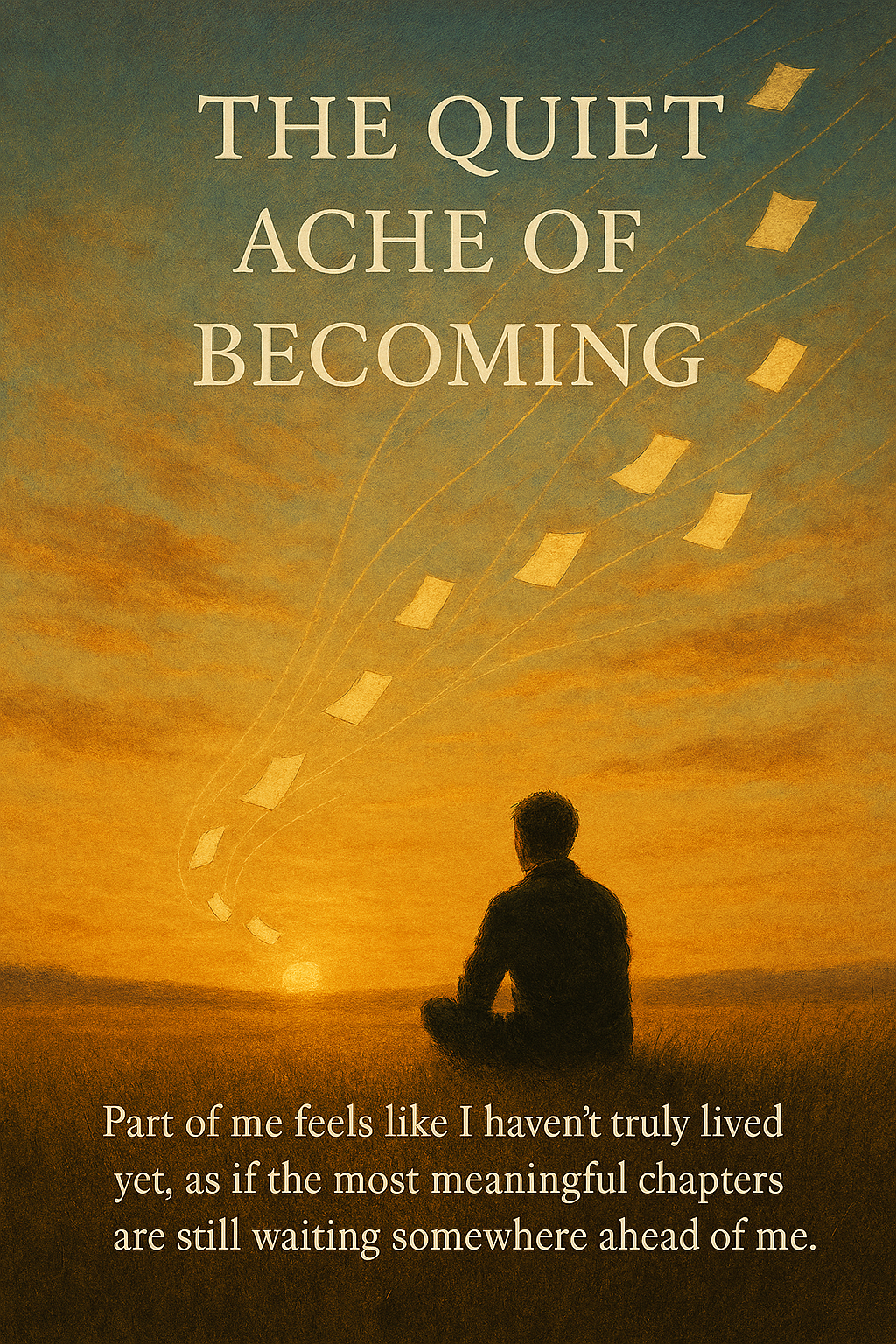
The Ache
I’ve been sitting here thinking about life. I am contemplating my life and the strange, tender hope I carry. I hope to live to be a hundred years old. It’s not just about longevity; it’s about longing. Part of me feels like I haven’t truly lived yet. It seems as if the most meaningful chapters are still waiting somewhere ahead of me. And yet another part of me looks at everything I’ve learned. It looks at everything I’ve endured. It whispers that I should be using that wisdom to make a real difference. I don’t feel like I’ve done that—not in the way I imagined I would.
There’s a quiet ache in wanting to leave behind something meaningful. I want something that outlives me and blesses generations I’ll never meet. But then the questions rise, uninvited but honest: What if that never happens? What if my life never produces the impact that echoes beyond my years? Would my existence still hold the same worth as someone whose influence stretches across time? Theoretically, I know the answer should be yes. But the heart doesn’t always rest in theory.
I’ve always believed that writing is one of the most powerful ways to leave a mark. A book that reaches the world becomes a vessel—carrying pieces of a soul into the minds of strangers. It shapes thought. It stirs emotion. It changes people. There’s something almost sacred about that influence, the way words can outlive the hands that wrote them.
But why do we, as human beings, feel such a deep need to express ourselves? Why do we crave a medium—whether writing, art, music, or conversation—to pour out the inner world we carry? Why is it so vital that someone hears us, understands us, or carries a piece of us onward? Is this longing woven into our nature? Is it part of our purpose?
Sometimes I wonder whether this impulse mirrors how we pass down our DNA. Maybe influence—whether biological, emotional, or spiritual—is part of a greater design. Maybe we’re meant to leave something behind, even if it’s small, even if it’s quiet.
But what happens if we never get the chance to share the deepest parts of ourselves? What if our visions, our inspirations, our private truths stay unheard? Does that make our lives any less valuable in the eyes of a higher power? Would someone whose work shapes the world be considered more deserving than someone whose efforts go unnoticed?
And then I think about legacy in its simplest form. What if I only pass my knowledge, my love, and my lessons on to my children? And if that ends my influence, will that still be enough? That still earns the words every soul longs to hear: “Well done, good and faithful servant.”
These thoughts came to me quietly, almost unexpectedly, but they stayed. And as I sat with them, I realized they weren’t born out of fear—they were born out of reflection. They stemmed from a wish to understand purpose and impact. They also came from a wish to understand the quiet ways a life can matter. This is true even when the world never sees it.
Closing
In the end, perhaps the measure of a life isn’t found in the size of its echo. It is found in the sincerity of its offering. Maybe our worth isn’t determined by how far our influence travels. It is in the quiet truth that we tried to love well. We aimed to learn deeply. We wanted to leave the world—no matter how small our corner of it—more whole than we found it. If that is all we ever manage to give, then maybe that is enough. Maybe that is the legacy. Maybe, in the eyes of the One who sees every hidden effort, it is already more than enough.
There are three essentials I genuinely couldn’t imagine living without: my heater, flossers, and nail clippers. Each one plays a surprisingly vital role in my daily comfort and well-being.
My heater is absolutely indispensable during the colder months—fall, winter, and even early spring. I have a deep aversion to the cold, not just emotionally but physically as well. In fact, I’m allergic to it, especially in my hands. Exposure to cold triggers an intense, almost unbearable itching sensation that drives me up the wall. It’s not just discomfort—it’s a kind of misery that makes me feel trapped in my own skin. While I could adapt if absolutely necessary, I know I’d carry a constant sense of unhappiness. The cold is my most uncomfortable comfort zone, and I dread it more than anything.
Flossers are another non-negotiable. I’d honestly give up my toothbrush before I’d part with my flosser. For me, oral hygiene is all about removing the food particles that get stuck between my teeth, and flossers do that far better than any toothbrush ever could. There’s something deeply satisfying about knowing my teeth are truly clean. They are not just brushed, but cleared of every last bit of debris. It’s a small thing, but it makes a big difference in how I feel.
Then there are my nail clippers. I get irritated the moment I notice my fingernails or toenails growing too long. As soon as I see those opaque tips forming, I instinctively reach for my clippers. It’s not just about grooming—it’s about feeling neat, tidy, and in control. Long nails feel like clutter to me, and I don’t like carrying that around.
My heater, my flossers, and my nail clippers might seem mundane, but still, they’re my personal pillars of comfort. They help me feel physically at ease, mentally clear, and emotionally grounded.







 freedup7