Growing up, I noticed that many of the older people in my community were quite superstitious. Some of them believed that things like splitting a pole or having a black cat cross your path could bring bad luck. Honestly, I never fully understood the reasoning behind these beliefs. My curiosity often led me to wonder, “How could a black cat lead to something bad happening?”
Insight
My views are based on reason, discernment, and a genuine desire to understand rather than fear. I have met individuals who practice both dark and white magic, which has provided me with a unique perspective on these practices. However, in some instances, I still found myself puzzled.
Astrology and Scripture
Astrology has always intrigued me. I believe there is truth embedded in its framework, similar to the truths found in Scripture. Both require interpretation, insight, and spiritual awareness. I bring up astrology because some people base their lives on daily horoscope forecasts, using them to predict the future or to gain an illusion of control over life’s uncertainties. I consider this to be a form of superstition.
It’s fascinating how strong beliefs can shape people’s reality, even if those beliefs aren’t grounded in truth. Many individuals spend their entire lives adhering to ideas and premises that go unchallenged, which can be quite limiting. I make it a point to question anything that doesn’t resonate with my heart or spirit. I trust that deep within me lies a sense of knowing that helps me discern what is true and what isn’t. Revelation, intuition, and spiritual awareness serve as my anchors. I remain attentive to what my spirit tells me — I believe we all possess a sense of inner guidance.
So no, I wouldn’t describe myself as superstitious. I share common concerns about the unknown, just like anyone else, but when something unsettles me, I choose not to shy away from it. Instead, I sit with it, reflect on it, and pour my soul out, waiting patiently for insight to come.
Some questions remain unanswered, but I stay committed to trusting the inner wisdom, the spirit that guides me, and the patterns I notice in my life and interactions.
If I were to compare myself to an animal, I would choose the eagle. I’m a free‑spirited soul who refuses to be restricted or held down, and the eagle mirrors that part of me perfectly. Its ability to soar high, ride the wind, and move with such confidence and independence reflects the way I move through life — spontaneous, intuitive, and unapologetically myself.
I’ve always been drawn to birds like eagles, falcons, ravens, and peacocks, and if the phoenix were real, it would be my first choice for its symbolism of renewal. But in the world we have, the eagle is the truest expression of my spirit: free to rise, free to roam, and free to be!
We made it. And the wonder of that truth is almost more than words can hold. We always imagined this moment, prayed for it, longed for it, and now here we are… reading what we once only dreamed.
Can you believe it?
There were days when we poured out our souls, pleading for the years that would lead to this very moment. Days when we asked for time—time to grow, time to become, time to live long enough to see the fullness of who we could be. Our hope, carried on the wing of a prayer, has come to fruition. Our souls cried out for longevity, for the chance to reach a ripe old age, and to use that time well. And we did. We truly did.
We bloomed late in life, and we knew it. We wanted more time to rise to our purpose and make the difference we felt stirring within us. And now, here we sit—our younger self speaking, our older self listening—reflecting on all that we accomplished, even the things we once doubted were possible.
We have witnessed generations come and go. We have seen eras shift, innovations unfold, and humanity rise and fall and rise again. We gained knowledge, wisdom, and understanding beyond anything our younger selves could have imagined. And we shared it—freely, generously—with those who came after us. We learned from them, too, growing through their perspectives, their courage, their new ways of seeing the world.
We never stopped learning. We never stopped transforming. Every exchange, every encounter, every season shaped us in ways that blessed both the giver and the receiver. And now, with a century behind us, all we can do is sit in gratitude for the time we were granted—time that truly was given on the wings of a prayer.
We made it. And every hope we carried became a reality.
So now, dear older self, sitting with a full heart and a full life, the question rises gently: What do we do with the time that remains? Are we ready to depart, or is there still more to live, more to learn, more to savor?
Only you can answer that now. But whatever you choose, know this: We used our time well. We became everything we hoped to be. And we made it—together!
The digital world was meant to make life easier—more connected, more creative, and more fun. However, for many teens, it has become something entirely different: a quiet pressure cooker where comparison is relentless and the feeling of “not enough” whispers constantly. Behind the selfies, achievements, and curated routines, countless young people are carrying an invisible burden they struggle to identify. Jordan is one of them. Her story isn’t dramatic or unusual, and that’s precisely why it matters. It reflects the experiences unfolding in bedrooms, classrooms, and during late-night scrolling sessions everywhere.
The Digital Pressure Cooker
Jordan’s Story
Jordan is sixteen, bright, creative, and usually quick to laugh. However, lately, each time she opens Instagram or TikTok, a knot tightens in her stomach. It isn’t one big thing—rather, a steady drip of comparison.
A classmate posting flawless selfies. A stranger showing a “perfect” morning routine. A friend is celebrating straight A grades and a new internship.
Jordan didn’t feel jealous; she just felt behind, as if everyone else had received a manual for life that she somehow missed.
Scrolling had become a reflex. After school, before bed, during homework breaks, and even at dinner, Jordan felt smaller, less capable, and diminished with every swipe.
She began to avoid mirrors. Her grades declined. She felt exhausted all the time. When her mom asked what was wrong, Jordan shrugged and said, “I’m fine,” even though she wasn’t.
The Moment Everything Cracked
One night, after an especially long scroll session, Jordan saw a video of a teen influencer talking about “hustle culture” and “grinding harder.” The comments were full of praise.
Jordan stared at the screen and whispered, “I can’t keep up.”
For the first time, she realized the apps weren’t just entertainment—they were shaping how she saw herself. And it wasn’t healthy.
A Turning Point
The next day, Jordan met with the school counselor, Ms. Rivera, who listened without judgment. When Jordan finished, she said something simple:
“Your mind is exhausted from trying to measure itself against illusions.”
She explained how social media compresses countless comparisons into minutes, overwhelming the brain’s natural ability to manage stress. She also mentioned that many teens experience this feeling, even those who appear confident online.
Then she offered a plan—not a punishment, not a lecture, but a path back to balance.
The Solution: A Digital Wellness Reset
Ms. Rivera helped Jordan build a three-part strategy:
1. Device‑Free Hours
Jordan chose two windows each day:
Before school (7:00–8:00 AM)
Before bed (9:00–10:00 PM)
During these times, the phone stayed in another room. The first few days were hard, but Jordan noticed she slept better almost immediately.
2. Curated Feeds
She unfollowed:
Accounts that triggered comparison
Influencers promoting unrealistic lifestyles
Friends whose posts made her feel inadequate
And she added:
Art pages
Nature videos
Mental health educators
Accounts that made her laugh
Jordan said it felt like “opening a window in a stuffy room.”
3. Real‑World Anchors
Jordan committed to:
One walk outside each day
One face‑to‑face conversation with a friend or family member
One activity that had nothing to do with screens (drawing, basketball, baking)
These small habits grounded her in her own life, not someone else’s highlight reel.
What Changed
Within a few weeks, Jordan noticed:
Her anxiety eased.
Her self-esteem felt less fragile.
She laughed more.
She slept better.
She felt present again.
The apps didn’t disappear from her life—but the power they held over her did.
Jordan learned that the goal wasn’t to escape the digital world but to navigate it with awareness, boundaries, and self-respect.
Closing Remarks
Jordan’s journey is a reminder that digital overwhelm isn’t a personal failure—it’s a human response to an environment designed to pull us out of ourselves. When teens learn to set boundaries, curate what they consume, and reconnect with the real world, something powerful happens: their sense of self returns.
The goal isn’t to abandon technology, but to use it in ways that honor mental health, creativity, and inner steadiness. Every young person deserves to feel grounded in who they are, not who the internet tells them to be. And sometimes, all it takes is one honest moment, one supportive adult, and one small reset to help them find their way back.
Seventeen-year-old Mia woke up every morning with her phone already in her hand. Before she even stretched or sat up, she was scrolling—checking who posted overnight, who looked flawless, who seemed happier, more successful, more together.
Her bedroom, once a cozy sanctuary, had become a 24/7 digital hub. The glow of her screen was the last thing she saw at night and the first thing she saw in the morning. Meals weren’t meals anymore—they were opportunities to catch up on notifications. Even when she sat with her family, her mind was somewhere else, lost in a feed that never stopped moving.
Her screen time app sent weekly reports, but she never opened them. She didn’t want to know.
Her feed was full of fitness influencers, beauty gurus, and classmates who seemed to have perfect lives. Every scroll tightened something in her chest. She didn’t realize it, but she was curating her own stress—following people who made her feel behind, unfollowing no one, and letting the algorithm decide what she saw.
Real-life friendships faded into group chats. She skipped club meetings because she felt too drained. She told herself she was “just tired,” but the truth was simpler: she felt disconnected from her own life.
One night, after hours of scrolling, Mia noticed her heart racing. She wasn’t doing anything stressful—just lying in bed, staring at strangers. But her body felt tense, her mind foggy, her mood low. She whispered into the dark, “Why do I feel like this?”
She didn’t have an answer. She only knew she didn’t feel like herself anymore.
Reclaiming Life Through Digital Wellness
The shift began quietly.
One morning, Mia’s phone died overnight. She woke up to sunlight instead of a screen. For the first time in months, she felt… calm. She noticed the warmth on her face, the softness of her blanket, the quiet of her room.
That small moment sparked something.
Setting Boundaries
She decided to make her bedroom a device‑free zone at night. She charged her phone in the hallway and bought a $10 alarm clock. Meals became phone‑free, too. At first, she felt restless, as if she were missing something. But within days, she noticed she was actually tasting her food, hearing her family’s voices, and feeling present.
Tracking Her Usage
Curious, she opened her Screen Time app. The number shocked her. Not with shame—but with clarity. She set gentle limits: two hours of social media a day. Not a punishment, just a boundary.
Curating Her Feed
She unfollowed accounts that made her feel tense, inadequate, or drained. She followed artists, nature photographers, mental health educators, and creators who made her laugh. Her feed shifted from comparison to inspiration.
Digital Detox Moments
On weekends, she tried short detoxes—two hours without her phone, then half a day. She filled the time with things she used to love: sketching, baking, and walking by the river. She realized she didn’t miss the constant noise.
Prioritizing Real-Life Connections
She rejoined her school’s art club. She started meeting her best friend for hot chocolate after class. She noticed that real conversations left her feeling full, not empty.
Mindful Scrolling
Whenever she opened an app, she paused and asked herself, How do I feel right now? If she felt anxious or drained, she closed it. No guilt. Just awareness.
What Changed
Within a month, Mia felt lighter. Her sleep improved. Her creativity returned. She laughed more. She felt connected—to her friends, to her family, to herself.
Social media didn’t disappear from her life. It simply stopped running it.
She realized she didn’t need to be “enough” for the internet. She only needed to be present in her own life.
A quiet story about what happens when a woman realizes she has outgrown the life she built to be safe.
Mary’s story begins in a place that felt safe, predictable, and quietly limiting—a life built almost entirely within her comfort zones. At the time, she didn’t recognize them as such; to her, they were simply the way things were: familiar routines, familiar people, and familiar fears that she never challenged. However, life has a way of nudging us forward, even when we’d prefer to stay still.
Mary’s World of Comfort
Mary grew up believing that stability was the same thing as peace. She kept her circle small, avoided risks, and chose paths she already knew she could succeed at. Her days were shaped by habits that required little of her — the same job for years, the same routes, the same conversations, the same dreams she never dared to pursue.
There were three comfort zones she lived in:
Emotional comfort — She avoided conflict, avoided expressing her deeper thoughts, and avoided anything that might expose her vulnerability.
Social comfort — She stayed around people who expected nothing new from her.
Spiritual and intellectual comfort — She didn’t question her beliefs, her patterns, or the stories she told herself about who she was.
Mary wasn’t unhappy. She was simply un-stretched — like a seed that never felt the soil shift enough to sprout.
The Moment Everything Shifted
Her turning point wasn’t dramatic. It was a quiet realization: She had outgrown the life she was living.
It happened one morning as she sat in her kitchen, sipping the same tea she’d made every day for years. She looked around and felt a strange mix of gratitude and restlessness. She whispered to herself, “Is this all I’m meant to be?”
That question didn’t accuse her — it awakened her.
How Mary Stepped Beyond Her Comfort Zones
Mary didn’t leap. She inched. Growth came through small, intentional acts that slowly rewired her sense of possibility.
1. She started telling the truth — first to herself.
Mary admitted she was afraid: afraid of failure, judgment, change, and even success. Naming her fears didn’t weaken her; it clarified her path. She realized comfort had been her shield, not her destiny.
2. She practiced doing one uncomfortable thing a week.
Sometimes it was speaking up in a meeting. Sometimes it was trying a new class. Sometimes it was saying “no” when she usually said “yes.” Each act was tiny, but each one expanded her world.
3. She sought environments that challenged her mind and spirit.
Mary joined a community group where people discussed ideas, dreams, and personal growth. She listened at first, then slowly began to share. She discovered that discomfort wasn’t danger — it was development.
4. She allowed herself to fail.
This was the hardest part. Mary tried things she wasn’t good at. She made mistakes. She felt embarrassed. But she kept going. Failure became a teacher instead of a threat.
5. She redefined comfort.
Eventually, Mary realized that comfort wasn’t supposed to be a permanent home — it was a resting place between seasons of growth. She learned to move between comfort and challenge with intention, not fear.
Who Mary Became
Mary didn’t transform into someone else. She grew into the version of herself she had always sensed but never stepped toward.
She became:
More confident, because she trusted her ability to navigate the unknown.
More expressive, because she no longer hid her voice.
More connected, because she allowed herself to be seen.
More alive because she stopped living in a loop.
Her comfort zones didn’t disappear — they simply expanded until they could hold the fullness of who she was becoming.
Mary’s story is a reminder that growth doesn’t require a dramatic break from the past. It begins with a single question, a small step, and the courage to let discomfort be a doorway rather than a wall.
Crystal had always been articulate. She could speak with conviction, quote wisdom, and inspire others with her words. In her community, she was known for her eloquence—her ability to “talk the talk.” People admired her insights, her clarity, her declarations of truth. But beneath the surface, Crystal carried a quiet ache. She knew her words outpaced her walk.
She could say “forgiveness matters,” but held grudges that hardened over time. She could speak of patience, but snapped when things didn’t go her way. She could preach unity, but secretly judged those who didn’t think like her. Her talk was polished. Her walk was patchy.
One day, after a particularly tense conversation with a friend who challenged her, Crystal found herself standing in front of an old mirror in her home. It was a full-length looking glass, the kind that didn’t flatter or distort. She stared at her reflection—not just at her face, but at her posture, her eyes, her presence. And she whispered, “Is this who I say I am?”
That moment marked a shift.
Crystal began to walk differently—not perfectly, but intentionally. She stopped using words as shields and started using silence as a tool for self-reflection. She apologized more. She listened longer. She chose actions that matched her values, even when no one was watching.
People noticed. Not because she made announcements, but because her presence changed. Her integrity became visible. Her consistency became magnetic. She no longer had to convince anyone of who she was—her life did the talking.
Crystal learned that talking the talk is about expression. Walking the walk is about embodiment. And the space between the two is where transformation lives.
We live in a world overflowing with words. Promises, declarations, affirmations, and public statements roll off tongues with ease. But words without embodiment are like seeds scattered on concrete—they make noise when they fall, but they never take root.
Talking the talk is easy. It costs nothing to say what we believe, what we value, or what we intend to do. But walking the walk—that’s where the real work begins. That’s where character is shaped, trust is built, and transformation becomes visible.
The gap between speech and action is where many of us struggle. We mean well, but meaning well is not the same as living well. We declare patience, but snap under pressure. We preach compassion but withhold forgiveness. We speak of unity but cling to division.
When our words and actions don’t match, something inside us knows. Integrity becomes unsettled. Relationships weaken. Our credibility thins. And the younger generation—watching us more closely than we realize—learns to doubt what adults say.
Walking the walk doesn’t require perfection. It requires presence. It asks us to slow down, notice ourselves, and choose alignment one decision at a time. It’s the quiet consistency of living that we claim to value.
Anyone can talk the talk. But the ones who walk the walk—even imperfectly—become living invitations. They don’t have to announce their values; their lives reveal them.
In the end, the world doesn’t need more speeches. It needs more examples. And each of us has the power to become one.
Looking Glass
None of us perfectly talks the talk and walks the walk. However, occasionally, we encounter people who come close, and it’s inspiring to witness their character in action. These individuals live in alignment; they say what they mean and mean what they say. Their words and actions are consistent, their presence is steady, and their integrity is clearly visible.
People like that have always been my favorite. Being around them forces you to confront yourself. You will either appreciate them or love them because if you choose to stay in their company, they will keep you honest. If you can’t face the truth—if you prefer denial, wearing masks, or seeking comfort over clarity—you won’t remain in their presence for long. We’ve all experienced this at some point, trying to walk the walk and talk the talk, while growing into the person we claim to be.
I remember taking a personality assessment in college. My advisor, who understood me well, looked at my results and said, “This isn’t you—this is who you want to be.” She was right. My answers reflected my inner desires rather than my actual lived reality. I had subconsciously selected traits I admired, traits I hoped to embody, and traits I wanted to project—traits that didn’t yet align with how I was living. The introverted part of me longed to become that version of myself, but I hadn’t fully developed into her yet.
It wasn’t until I married my first husband, a war veteran, that I truly began to understand the importance of aligning my words and actions. He was as genuine as they come. He often told me, “You talk a good game, but you don’t walk the walk.” At first, I didn’t fully grasp the meaning of his words. However, living with someone who embodies such authenticity made it impossible not to rise to that standard. Through the experiences we shared, I learned what he meant, and gradually, I became the kind of person who lived according to her words.
Life shapes who we are. Our experiences can either strengthen us or break us, and through this process, our character develops. Some people are raised to walk with integrity, while others learn it through hardship. Some are still in the process of becoming who they aspire to be, and some never achieve it.
Reflecting Back
The phrase “talking the talk and walking the walk” illustrates the concept of alignment—specifically, the often challenging journey between our stated beliefs and our actual behavior. My examples highlight something important: alignment is not something we are born with, nor does it happen automatically. It is developed through real-life experiences, shaped by the people who challenge us, the truths that confront us, and the moments that prevent us from hiding.
Some people grow up in homes where integrity is modeled daily. Others, like me, discover it through relationships that reflect their true selves. Then there are those who only become aware of this gap when life reveals it—when the version of themselves they describe no longer aligns with the person they actually are.
My college assessment gave me a glimpse of that gap: the self I wanted to be versus the self I was still becoming. My marriage to a man who lived with raw integrity pushed that gap into the light. And my willingness to grow—slowly, imperfectly, courageously—closed it.
That’s the heart of walking the walk. It’s not perfection. It’s progression.
It’s the moment you stop admiring the traits you circled on a test and start embodying them in real time. It’s the shift from wanting to be authentic to choosing authenticity, even when it costs you comfort. It’s the quiet, daily decision to let your actions speak for you.
The truth is, most people never make that shift. Some stay in the realm of words—eloquent, expressive, full of intention but short on embodiment. Others step into the work of becoming, letting life refine them until their walk finally matches their talk.
My story shows that becoming is possible. That alignment is learned. My message invites others to ask themselves the same question I had to face:
Are you living the truth you speak? Or are you still speaking the truth you hope to live?
During the Spring and Autumn seasons, one of my favorite ways to spend time shopping is a day excursion to the charming historic Main Street districts scattered throughout Maryland. Each visit feels like a small adventure—an opportunity to support local businesses, discover unique treasures, and immerse myself in a community’s character.
Stepping into each shop is like entering a new world. Though they sit just steps apart, every store has its own personality, its own story to tell. That’s what makes the experience so meaningful. The warmth and individuality of these spaces make shopping something deeper—personal.
The shops line both sides of Main Street, inviting passersby with colorful facades, flower baskets, and welcoming windows. I rarely have time to visit every business in one trip, so I always leave with a mental note of the ones I’ll explore next time. After hours of browsing, my heart feels full—and my feet need a break. That’s when I pause at a cozy café or restaurant for lunch, often with a small purchase already in hand to enjoy along the way.
But this isn’t just about shopping. It’s about the joy of discovery. Each Main Street across Maryland offers its own blend of history, scenery, and spirit. I love traveling to the different Main Street counties to observe the subtle differences and surprising similarities. Whether it’s the cobblestone charm of Ellicott City, the waterfront elegance of Annapolis, or the artistic energy of Frederick, each location leaves its own impression.
Some of my favorite stops include:
Ellicott City (Howard County)
Annapolis (Anne Arundel County)
Frederick (Frederick County)
Chestertown (Kent County)
Berlin (Worcester County)
Havre de Grace (Harford County)
Talbot County and others
I enjoy photographing the streets, admiring the architecture, and soaking in the atmosphere. But most of all, I treasure the feeling of being part of something local, something rooted. Each shop I visit is a thread in the fabric of Maryland’s small-town charm—and every shopping spree becomes a story worth remembering.
1. Personalizing systemic failure harms the patient, not the system
My initial reaction—feeling dismissed, devalued, and invisible—is deeply human. But the lesson I draw is that taking a systemwide breakdown personally only injures one’s own health. The system does not feel your anger; your body does. Recognizing this protects your emotional and physical well‑being.
2. The healthcare system is overwhelmed, and individual doctors are caught inside it
My story exposes a larger truth: many doctors are not intentionally negligent—they are drowning. Too many patients, too many illnesses, too much administrative burden, and too little time. This does not excuse poor communication, but it explains why it is happening everywhere. The lesson is that the problem is bigger than one doctor; it is structural.
3. Patients must advocate for themselves because the system cannot reliably do it for them
My experience shows that passive waiting can be dangerous. Patients must:
follow up,
ask questions,
demand clarity,
and report failures.
Self‑advocacy is no longer optional; it is a survival skill in an overloaded system.
4. Reporting failures is an act of responsibility, not hostility
The important moral lesson: silence allows dysfunction to continue. Reporting is not about punishing a doctor—it is about:
protecting yourself,
protecting future patients,
and signaling to the system that something is breaking.
Even if the system does not change immediately, speaking up is a form of integrity and civic duty.
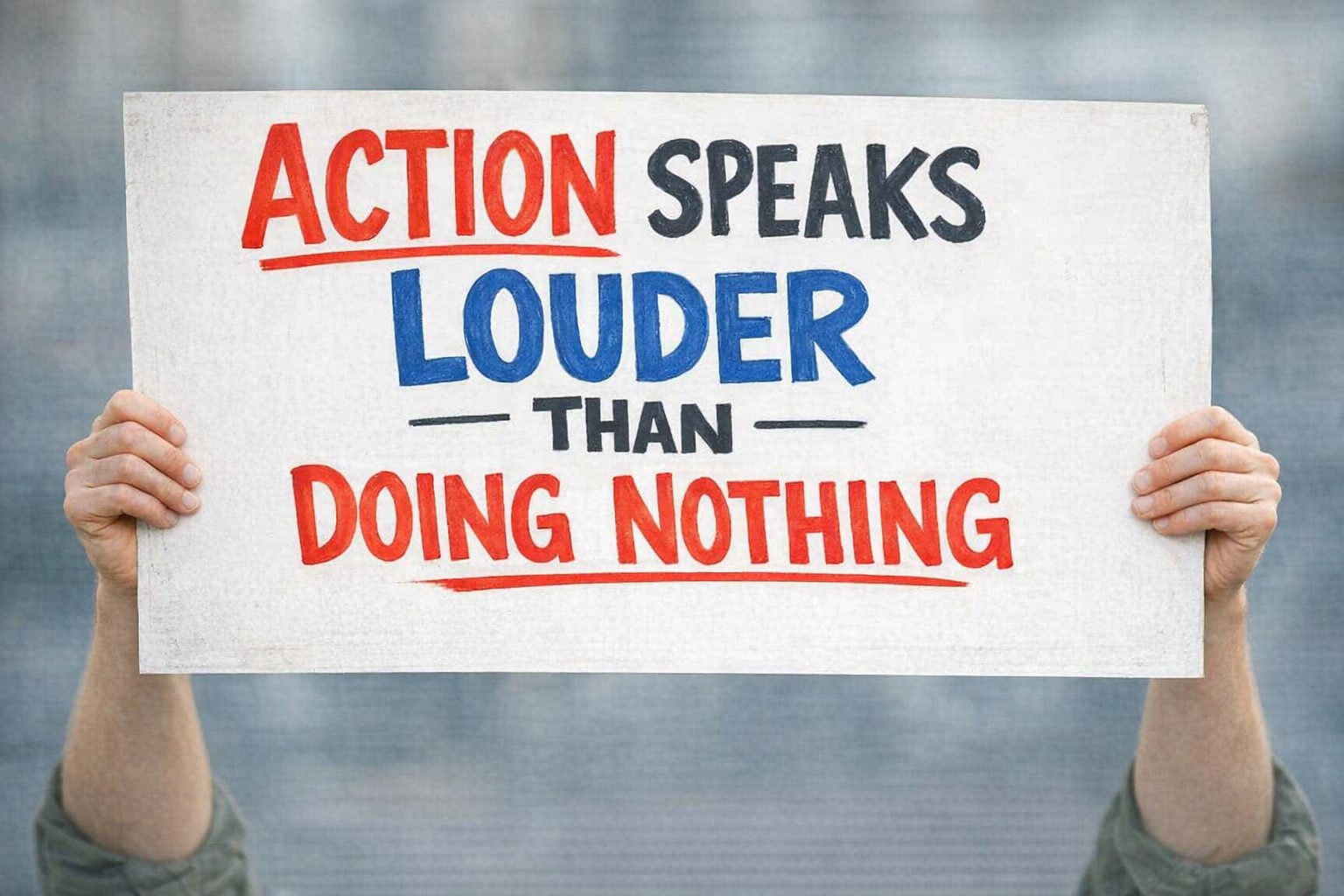
5. Hope without action changes nothing
My story reveals a clear distinction: Hoping things improve and acting to improve them. The lesson is that change—personal or systemic—requires deliberate steps. Hope alone is passive; action is transformative.
6. Emotional regulation is essential in a world where systems are failing
I learned that anger, when left unchecked, becomes self‑destructive. The lesson is not to suppress emotion, but to channel it into constructive action. I chose to act rather than stew in frustration, and that choice restored my peace.
7. Even if the system does not change, you can
My story ends with a powerful truth: systemic change is uncertain, but personal change is always possible. By reporting, by advocating, by refusing to be silent, I reclaimed my agency. That is meaningful, even if the system remains flawed.
CONCLUSION
In the end, this experience taught me that while the healthcare system is strained and often fails to see the human being behind the chart, I cannot afford to internalize its shortcomings. Personalizing systemic failure only harms my own health. What I can do is advocate for myself, speak up when something is wrong, and refuse to disappear into the numbers.
Reporting negligence is not an act of hostility but an act of responsibility—to myself, to other patients, and to the integrity of care itself. Even if the system does not change overnight, taking action restores my agency, protects my well‑being, and plants the seeds of accountability.
In a world where institutions are overwhelmed, and people often feel unseen, choosing to act rather than silently endure becomes both a personal necessity and a contribution to the possibility of something better!






 freedup7