Although I’m not drawn to traditions, if I had to select a favorite festive day of unity, it would undoubtedly be Thanksgiving. The joy I experience comes primarily from family and friends coming together and breaking bread. The delicious food and the delightful array of aromas fill the air during this special time.
Gratitude and connection
As family and friends gather around the table, we share what we are thankful for in a heartwarming ritual. While our gratitude isn’t confined to one day, Thanksgiving serves as a lovely opportunity to reflect on our blessings and hear the heartfelt expressions of appreciation from those we cherish.
It’s a moment filled with laughter, stories, and connection, allowing us to genuinely catch up and reminisce as we revel in each other’s company. The warmth and togetherness of the day truly make it a cherished occasion.
Mara woke before sunrise, the sky still holding its breath. She sat at the edge of her bed, feeling the familiar tug of questions that had followed her for years — Who am I becoming? Am I any closer to who God intended me to be?
She whispered a prayer, not with confidence, but with longing. This was becoming — the reaching, the stretching, the quiet ache of a soul that knows there is more.
She opened her Bible to 1 Corinthians 13:13. Faith. Hope. Love. She had read the words a thousand times, but this morning they felt like a mirror.
Faith had carried her through seasons when she could not see. Hope had kept her moving when nothing made sense. But love — love still felt like something distant, something she was trying to grow into.
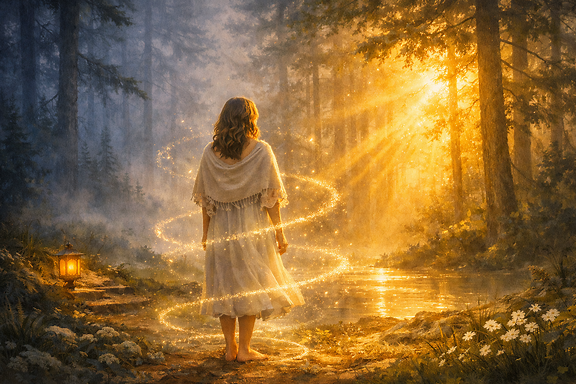
She made tea, wrapped herself in a shawl, and stepped outside. The world was still dim, the horizon only beginning to blush with light. She walked slowly, listening to the quiet rhythm of her breath.
As she walked, she felt the old familiar tension — the part of her that was always trying to improve, to heal, to understand, to become. She could feel her mind reaching, analyzing, striving.
This was the realm of faith and hope — the realm of becoming.
But then something shifted.
A breeze moved across her face, soft and warm, carrying the scent of early spring. The first light touched the tops of the trees, and suddenly the world was not asking her to reach for anything. It was simply there, radiant and whole.
And in that moment, she felt something inside her loosen — a quiet surrender, a falling into place.
She wasn’t reaching anymore. She wasn’t striving. She wasn’t trying to become anything.
She was simply being.
The love she had been trying to grow into was already present — not as an emotion, but as a state of alignment. A resonance. A remembering.
She felt it in her chest, warm and steady. She felt it in her breath, slow and unforced. She felt it in her cells — as if something ancient and divine within her had awakened.
It was as though her very DNA recognized the moment. As though the blueprint of her being — the Divine Pattern — had always known how to return to harmony.
Love wasn’t something she had to achieve. She had to allow it.
She stood there in the early light, not becoming, but being — aligned, attuned, whole. Faith and hope had brought her to this threshold, but love carried her across it.
And for the first time, she understood: Becoming is the journey back to the truth. Being is the truth finally lived.
She closed her eyes and let the warmth settle into her bones. No striving. No reaching. Just resonance.
Eliana had always believed that life moved in straight lines — one decision leading to the next, one prayer answered or unanswered, one season replacing another. But the year everything fell apart taught her otherwise. It was the year she learned what faith, hope, and love truly meant — not as words, but as states of being.
Faith — When You Cannot See
It began on a winter morning when she received news that left her breathless. The future she had imagined collapsed in a single phone call. For weeks she moved through her days like someone walking through fog. She prayed, but her prayers felt thin. She tried to trust, but trust felt like stepping into darkness.
And yet, something in her kept whispering, Take the next step.
That whisper was faith — not confidence, not certainty, but the quiet courage to move when nothing was visible. Faith was the hand she held in the dark, the unseen bridge beneath her feet. It didn’t remove the fog, but it carried her through it.
Hope — When You Cannot Feel
Spring came, but her heart didn’t thaw with the season. She felt suspended between what she had lost and what had not yet arrived. She wasn’t sinking, but she wasn’t rising either. She lived in the in‑between.
One evening she sat by the river, watching the sun melt into the horizon. The sky shifted from gold to rose to violet, and something inside her stirred — a small, fragile ache that felt like longing.
It wasn’t joy. It wasn’t relief. It was the faint sense that something good was still possible.
That was hope — the soul leaning forward even when the heart is tired. Hope didn’t erase her grief, but it kept her from closing her heart. It kept her open to tomorrow.
Love — When You Finally See
Summer arrived quietly. One morning, Eliana stepped outside just as the sun was rising. The air was warm, the world still hushed. She wasn’t praying, she wasn’t searching, she wasn’t trying to believe anything. She was simply standing there, breathing.
And then it happened — not a miracle, not a revelation, but a shift.
The light touched the trees in a way that made them glow. A breeze moved across her skin like a blessing. She felt her chest soften, her breath deepen, her mind grow still.
She wasn’t reaching anymore. She wasn’t longing. She wasn’t becoming.
She was simply being.
And in that stillness, she felt it — love. Not as emotion, but as presence. As alignment. As the quiet recognition that she was held, guided, and connected to something larger than her own story.
Faith had carried her through the darkness. Hope had kept her heart open. But love — love was the moment she stepped into the light.
Love was the state where nothing was missing. Nothing was broken. Nothing was out of tune.
It was the Divine Pattern awakening inside her — the blueprint of harmony woven into her very being. She felt it in her breath, her bones, even in the quiet architecture of her cells. It was as if her DNA recognized the moment and whispered, This is who you are.
Faith had been the journey. Hope had been the bridge. Love was the homecoming.
And in that moment, she understood the scripture not as a verse, but as a lived truth: Faith helps you walk. Hope helps you endure. But love — love is the place where the soul finally rests.
My first camping experience is etched vividly in my memory, a blend of anxiety and unexpected terror that has lingered for over 20 years. I can still picture myself huddled in the cramped confines of the tent, trembling from the chill that pierced through my thin blankets in the early hours of dawn, praying fervently for the first light of day to break. That moment—the sheer dread I felt—continues to haunt me, especially considering my deep aversion to the cold.
Let me start from the beginning. My husband, full of enthusiasm and confidence, assured me that he was a seasoned camper. With a persuasive smile, he insisted that if I just took a chance on it, I would discover a newfound appreciation for the great outdoors. Against my better judgment and persistent doubts, I decided to embrace his optimism. After all, I had reservations about camping in early spring, with temperatures still brisk and unpredictable—but he assured me it was the perfect time to immerse ourselves in nature.
Upon our arrival at the campground, my apprehensions began to fade as I took in the breathtaking vista—the shimmering lake bordered by lush greenery, the soft rustle of leaves in the cool breeze. We spent the day delighting in simple pleasures: grilling over an open flame, navigating the tranquil waters in a rented boat, and meandering along scenic trails, laughter echoing through the air. However, as twilight descended and the sun dipped below the horizon, reality began to dawn on me. My earlier excitement waned as the chill in the air became sharper, and the once-inviting surroundings grew eerily quiet.
Setting up the tent was a challenge in itself, but I paid little mind to what awaited us as daylight dwindled. With no other campers nearby, an unsettling isolation enveloped me as darkness swallowed the landscape. The temperature plummeted, and as I sensed the night closing in, a wave of panic washed over me. My anxious thoughts spiraled into a frenzy, battling against the reassuring words of my husband, who insisted that everything would be fine and urged me to relax.
Once inside the tent, I hoped to find solace in restorative sleep. Yet, my eyelids barely fluttered shut before I was jolted awake by the relentless drumming of bugs against the fabric, the haunting howls of distant wolves or perhaps foxes echoing through the night, and a cacophony of unidentifiable, unsettling sounds. As the clock struck 1:30 a.m., the world outside felt hostile, and any hope of drifting back to sleep evaporated. Sitting upright on the cold, hard ground, I shivered, wrapped in nothing but flimsy blankets—no sleeping bags to shield me from the biting cold. My mind raced with fearful thoughts of bears lurking just outside our fragile sanctuary. Thankfully, no bears ventured too close, but the unforgiving chill of the ground seeped into my bones while my husband remained blissfully oblivious to my growing distress, deep in slumber.
Time stretched interminably. I was engulfed in a fog of misery, aching to escape the wild confines of our tent and return to the comforts of home. Camping had quickly become a nightmare rather than a desirable adventure.
In retrospect, it was evident that we were woefully unprepared for this expedition—absent were the essentials that would have provided some sense of security, like actual sleeping bags and adequate protection from the elements or wildlife. The uneasiness gripped me fiercely as I lay surrounded by the vast unknown, the thrum of insects and the rustle of unseen creatures serving as constant reminders of my vulnerability. That experience left an indelible mark on my soul, a bittersweet reminder of fears faced and a night I will never forget.
When Jesus said, “You are the light of the world,” in Matthew 5:14-16, He wasn’t only speaking about behavior. He was speaking about being, the inner radiance of consciousness itself. In esoteric understanding, “light” is not merely goodness or morality; it is awareness, presence, and awakened identity.
The Analogy: A Lamp on a Hill
A lamp does not struggle to shine. It does not force its glow. It simply reveals what is already there.
Esoterically, the lamp represents the inner self, the part of you that is connected to divine intelligence. A lamp placed high on a hill or a stand symbolizes elevated consciousness, the state in which your inner clarity becomes visible to others.
Light is awareness. A hill is perspective. A lampstand is intention.
When your awareness is elevated, your presence naturally illuminates the world around you.
The Call to Action: Shine Deliberately
“Let your light shine” is not a command to perform. It is an invitation to remove the coverings—fear, doubt, shame, conformity, self‑minimization—that dim your inner radiance.
Esoterically, shining your light means:
Living from your highest awareness
Acting from your inner truth
Allowing your presence to uplift others
Being authentic even when it feels risky
Choosing clarity over confusion
Choosing compassion over reaction
Light is not something you do. It is something you allow.
The Purpose: Illumination That Awakens Others
In the esoteric view, when you shine your inner light, you don’t just inspire good deeds—you activate recognition in others. Your clarity awakens their clarity. Your courage awakens their courage. Your presence awakens their presence.
Light calls to light.
This is why Jesus says the purpose is that others “glorify the Father”—not through obligation, but through recognition. When people see genuine light, they intuitively sense the Source behind it.
Your light becomes a mirror. Your life becomes a signal. Your presence becomes a reminder of what is possible.
Letting Your Light Shine Like a Lamp on a Hill
To shine like a lamp on a hill is to live from the highest part of yourself—open, unhidden, unashamed. It means:
Elevating your consciousness
Standing in your truth
Allowing your inner wisdom to guide your actions
Becoming a point of clarity in a world of noise
Being a steady presence in a world of instability
A lamp on a hill does not compete with darkness. It simply exists—and darkness recedes.
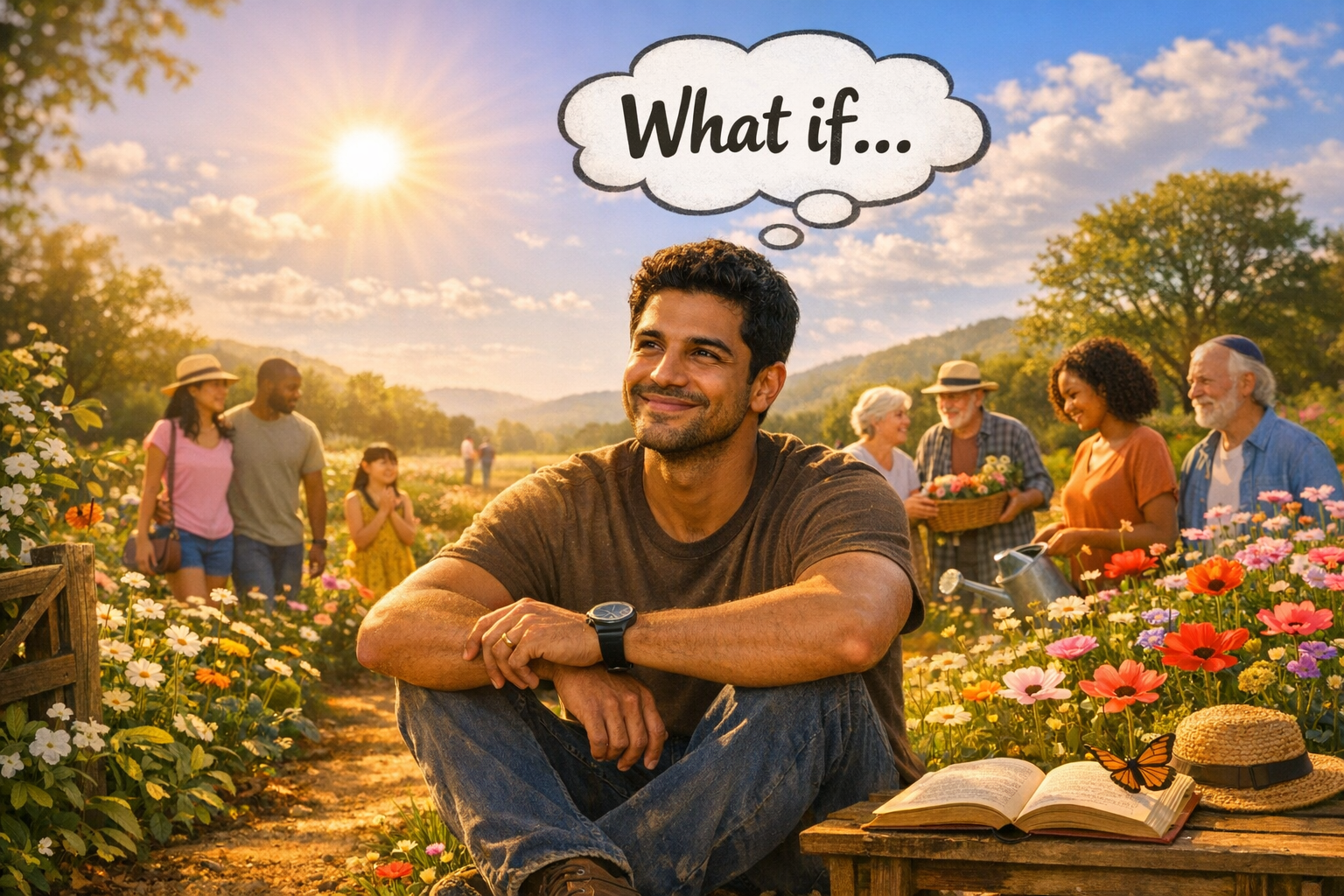
What if the mind became a garden and every thought a seed we chose? What if truth was the soil we planted in, and nobility the sunlight that helped us grow?
What if we paused before reacting, letting clarity rise before emotion? What if we sifted our thoughts like gold, keeping only what was right, pure, and whole?
What if beauty wasn’t rare anymore because we trained our eyes to see it? What if admiration came easily because goodness was what we magnified?
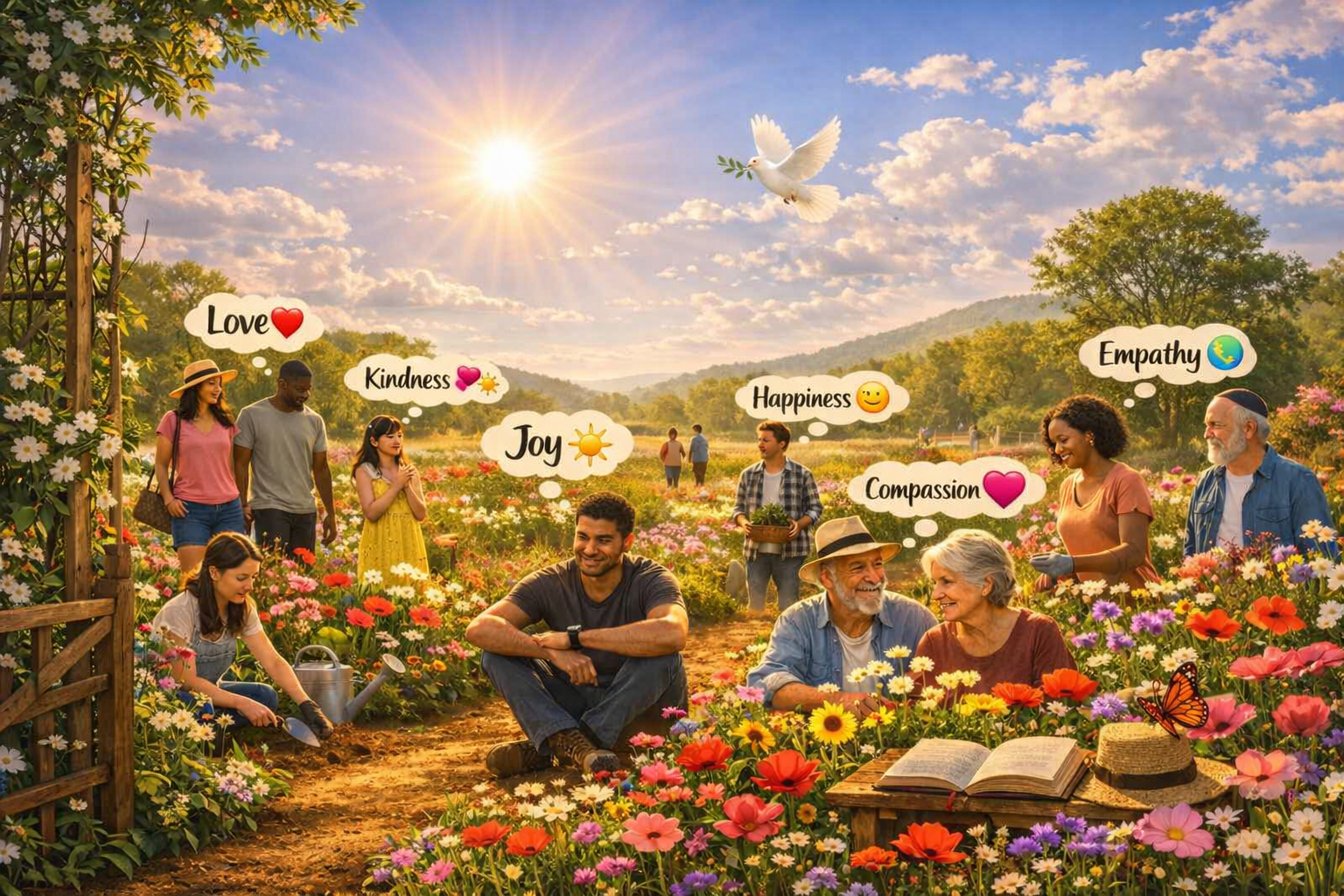
Imagine a world where focus was deliberate— where people tended their inner landscapes with the same care they give to what they love.
Arguments would soften. Fear would loosen. Kindness would multiply.
If everyone practiced this quiet discipline, the world wouldn’t suddenly be perfect— but it would be gentler, clearer, more human, more whole.
Because when the mind chooses light, the heart follows. And when the heart follows, so does the world.
There’s a line in Philippians 4:8 that has always felt like both an invitation and a challenge: “Whatever is true, whatever is noble, whatever is right, whatever is pure, whatever is lovely, whatever is admirable… think about such things.”
It’s easy to read that as a call to “just stay positive,” but that’s not what it’s saying. This isn’t about pretending life is perfect or ignoring what’s hard. It’s about choosing your focus—not passively, but intentionally.
We all have a mental spotlight. Wherever we aim it, our emotional world follows. Philippians 4:8 is essentially asking: What are you giving your attention to? What are you rehearsing in your mind? What are you feeding?
A Practice of Active Meditation
This verse isn’t describing a mood. It’s describing a discipline. A way of thinking that requires awareness, honesty, and effort.
Truth over assumption
Nobility over pettiness
What’s right over what’s convenient
What’s pure over what’s polluted
What’s lovely over what’s corrosive
What’s admirable over what’s cynical
It’s a mental filter—not to deny reality, but to keep your mind from being hijacked by the worst parts of it.
The Power of Deliberate Focus
When you choose what to dwell on, you’re shaping more than your thoughts. You’re shaping your emotional resilience, your relationships, your sense of peace, and even your identity.
This kind of focus doesn’t erase struggle. It simply keeps struggle from becoming the only story.
A Daily Reorientation
Every day, we’re flooded with noise—fear, comparison, negativity, distraction. Philippians 4:8 offers a way to reorient ourselves. To pause. To redirect. To choose a higher, truer, more grounded perspective.
Not because life is easy, but because our minds are powerful.
And what we dwell on becomes what we live out.
May we learn to guide our thoughts with intention, choosing what lifts us, steadies us, and aligns us with what is true and beautiful. What we dwell on becomes what we live out — so let’s choose well!
I am most productive during the early morning hours and into the afternoon, usually until around three or four o’clock. During this time, my focus and energy levels are at their peak, allowing me to engage deeply with my work. However, productivity can also spike unexpectedly when a stimulating idea or thought captures my attention. When faced with a challenge to solve or inspired by a new concept, my creativity flourishes. As soon as a project is presented to me, productivity begins.





 freedup7