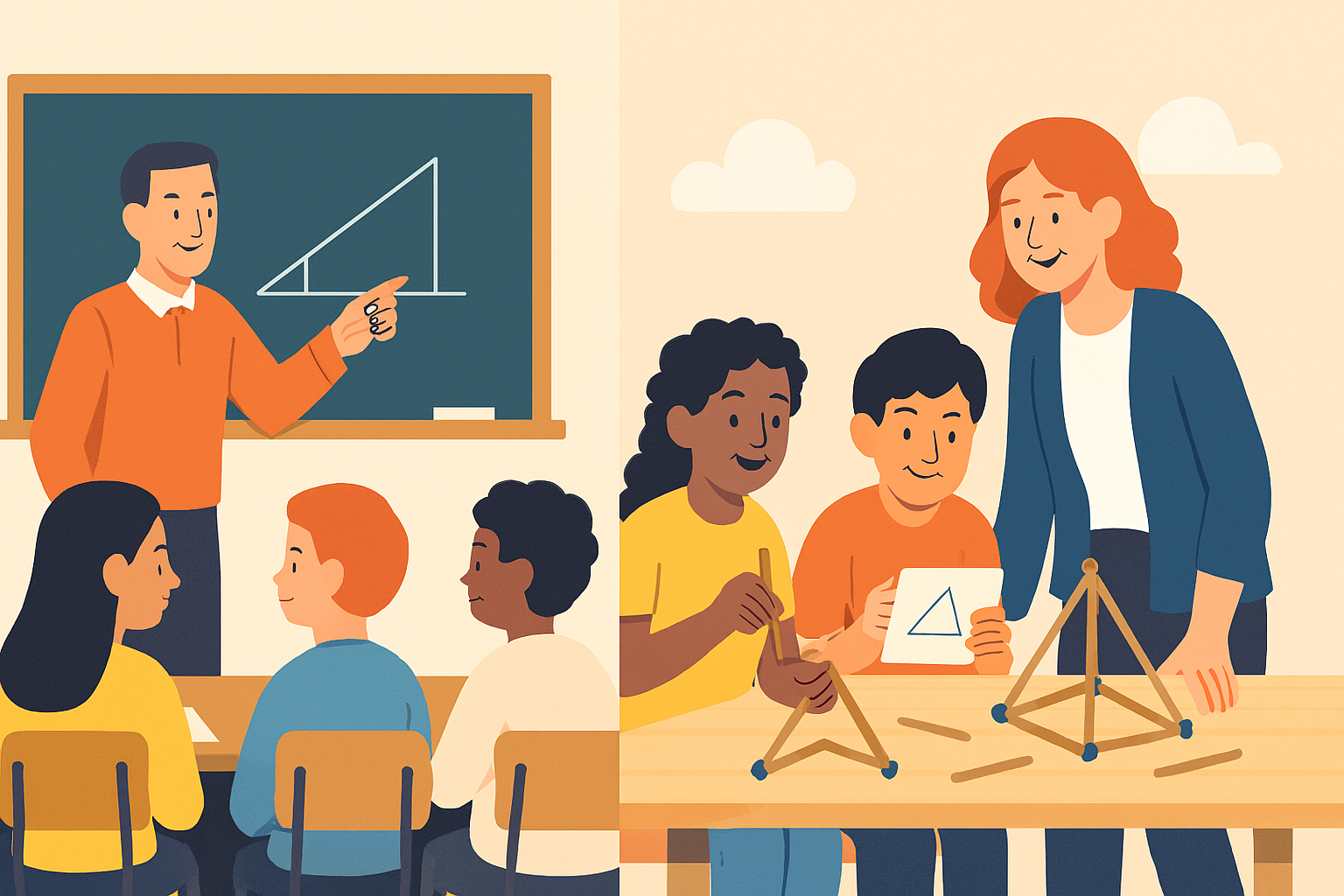
The Teacher and the Facilitator: Two Paths, One Classroom

For much of my life, I believed anyone standing at the front of a classroom was simply a teacher. Teaching, as I understood it, meant giving information—pouring knowledge into students like water into empty cups. That’s how many of us grew up learning: seated in rows, eyes forward, waiting for someone to tell us what we needed to know.

In those classrooms, the teacher held the lesson plan, the curriculum, and the answers. We were expected to receive, remember, and repeat. The work was neat, predictable, and contained. We read the chapter, completed the worksheet, and circled the correct choice. And if we were asked what we thought, the question rarely reached deep enough to uncover who we were or what we could become.

Our gifts, curiosities, and natural talents were seldom invited to the surface. Some children eventually drifted toward trade schools—not because they lacked ability, but because they longed to do something real. Something that matched their hands, their minds, their passions. They wanted to become, not just memorize.
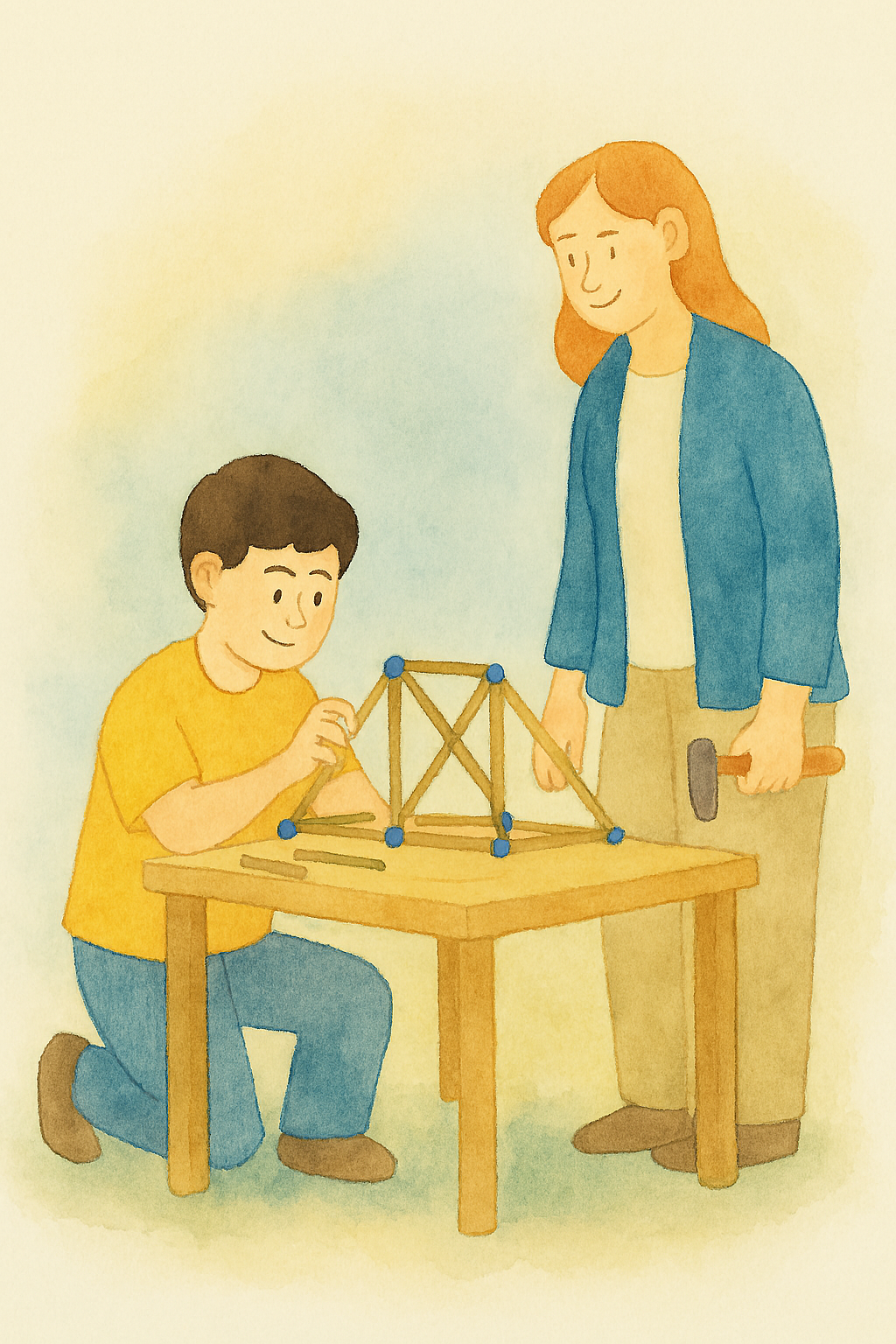
But then I encountered a different kind of guide—someone who didn’t fit the mold of “teacher” at all—a facilitator.

A facilitator doesn’t stand at the front of the room holding all the answers. They sit beside you, learning who you are, what you care about, and what you’re capable of. They don’t spoon‑feed information; they spark questions. They don’t hand you the path; they help you build it.

Instead of saying, “Here is what you need to know,” a facilitator asks, “What are you trying to create, and what do you need to get there?”

In a facilitator’s space, students don’t wait for direction—they seek it. They research, experiment, design, and revise. They learn by doing, not by repeating. The facilitator becomes a resource provider, a guide, a mirror. They notice strengths the student didn’t know they had. They notice weaknesses without shaming them. They ask the kind of questions that pull a student’s thinking upward, outward, and deeper.

The idea, the plan, the execution—those belong to the student. The facilitator helps them uncover the brilliance that was already there.

And that’s the real difference.

A teacher prepares students to answer questions. A facilitator prepares students to ask them.

A teacher fills the cup. A facilitator helps the student discover the well.
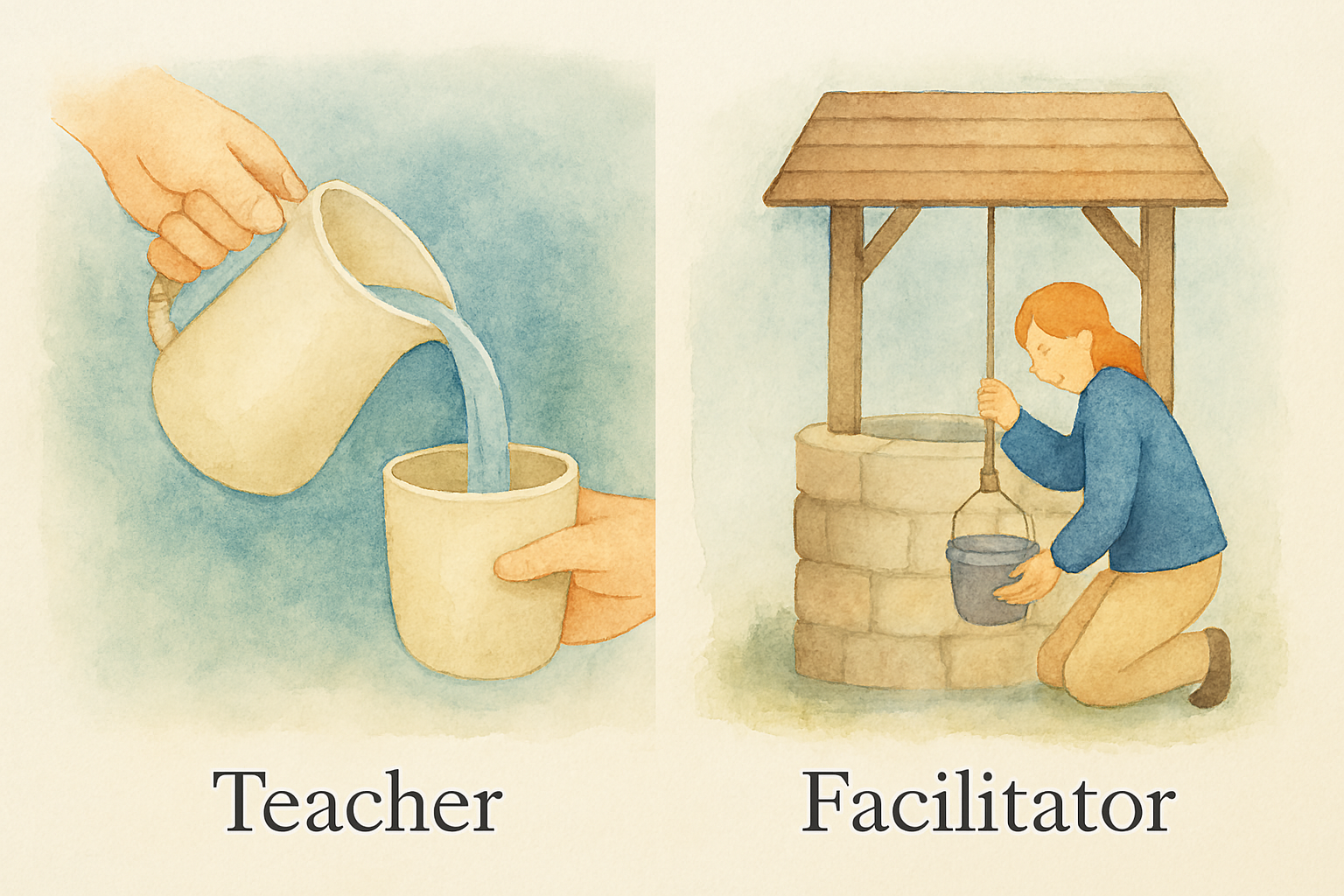
A teacher imparts knowledge. A facilitator awakens thinkers.

When facilitators guide students, they stop waiting to be told what to do. They begin to explore, question, build, and imagine. They stop being passive receivers and become active creators. They learn not just what to think, but how to think—and eventually, how to think for themselves.

In a world that desperately needs problem‑solvers, innovators, and visionaries, the facilitator’s role is not just different; it is essential. It is transformative.

In the end, the difference between a teacher and a facilitator isn’t just about method—it’s about mindset. One delivers knowledge; the other awakens it. One fills the room with answers; the other, with questions. And somewhere in that shift, students stop being taught and start becoming.

So perhaps the real question is this: In your own life—whether you’re guiding others or growing yourself—are you pouring into others, or helping them draw from within?

Posted in Uncategorized | Tagged , , , , , | 1 Comment

When the Sky Became a Classroom: What Airplanes and Birds Taught Me About Wonder

Before artificial intelligence expanded our imagination of what machines could do, I believed the airplane was humanity’s boldest triumph. The idea that a massive metal body—something that should by all rights remain earthbound—could rise into the sky with the grace of a bird felt almost miraculous. On warm evenings, I’d sit on my back porch and watch the sky as if it were a grand stage. Airplanes would glide across it, some close enough for me to see their lights blinking, others just silver strokes slipping between clouds. Whenever several appeared within seconds of each other, I felt a familiar thrill. How could so many be up there at once? And when birds drifted into view—sometimes in loose formation, sometimes alone—I wondered whether humans had borrowed their earliest lessons in flight from these feathered teachers.

It wasn’t until much later that I learned the truth: the sky is far busier than it looks. Thousands of airplanes crisscross the atmosphere at any given moment, moving along invisible highways. The realization startled me. The sheer volume of airborne traffic is mind‑bending, yet collisions are almost unheard of—far rarer than the accidents we see on the ground. Somehow, people on the earth below—controllers, pilots, engineers—manage this vast, silent ballet with astonishing precision. If only motorists had a system half as elegant.

That revelation stirred something in me. Curiosity tugged at me until I finally gave in. I wanted to understand the mechanics behind the magic. How does something so heavy stay in the air? What keeps it from falling? And how does its flight compare to the effortless glide of a bird?

So I began to learn. I studied lift, thrust, drag, and weight. I compared the living flexibility of a bird’s wing—feathers shifting, muscles adjusting—to the rigid, engineered design of an airplane’s airfoil. I discovered that while both rely on the same fundamental principles, they express them in beautifully different ways. The deeper I went, the more fascinating it became. I told myself, “If I ever decide to fly, I want to understand what’s holding me up there.” And with each new insight, the sky felt a little less mysterious and a lot more wondrous.

Now, when I look up and see a bird carving its path through the wind or an airplane tracing a line across the sky, I see more than motion. I see the forces at work, the physics, the instinct, the ingenuity. I see the quiet brilliance behind every flight.

And somehow, knowing the mechanics hasn’t diminished the wonder—it has only deepened it.

Questions:

What everyday wonder still has the power to lift your curiosity the way flight lifted mine?

When you look up at the sky, what mystery or marvel stirs your imagination?  

What phenomenon, big or small, makes you pause and ask, “How does that even work?”

Posted in Uncategorized | Tagged , , , | Leave a comment

Why Banning the Word Stupid from General Use Makes Sense

The word “stupid” is one term I believe should be permanently removed from our vocabulary. When someone calls another person stupid—or labels their thoughts or actions as stupid—it often lands with a heavy emotional impact. It can wound the recipient’s sense of self, undermine their confidence, and trigger darker, more painful thoughts. What was once a stable belief in their own intelligence can suddenly feel shaken.

I often wonder whether people who use this word ever pause to consider how it will be received. Do they think about the psychological harm it may cause? Do they use it intentionally to belittle someone, or do they simply speak without reflection? Regardless of intent, the word leaves no room for compassion, curiosity, or understanding. It dismisses the complexity behind why a person thinks the way they do, makes a particular choice, or expresses a certain idea.

The truth is simple: no one is stupid. Every person arrives at their conclusions based on their own reasoning, experiences, and understanding. Just because someone else might have chosen differently—or thinks they would have—does not make the other person inferior. It only means their approach was different. What one person calls “stupid” may actually reflect a perspective or logic they themselves cannot see.

Being called stupid, or having one’s actions labeled that way, is emotionally damaging. It diminishes a person’s dignity and can leave lasting harm. And yet, people often speak impulsively, unaware of the weight their words carry—or worse, fully aware and using the word to demean.

These are the reasons I believe the word “stupid” should be eliminated from everyday use. It degrades our shared humanity. Every person carries value, gifts, talents, and abilities that deserve respect. Even someone who thinks in a simple or elementary way may possess a depth of intelligence that others overlook.

So the next time someone feels tempted to use the word “stupid,” they should remember this: what appears elementary to one person may be brilliance in disguise to another.

Let us remove this word from our vocabulary and choose language that fosters dignity, respect, and understanding.

Posted in Uncategorized | Tagged , , , , | Leave a comment

The Story Version of: My Greatest Challenge

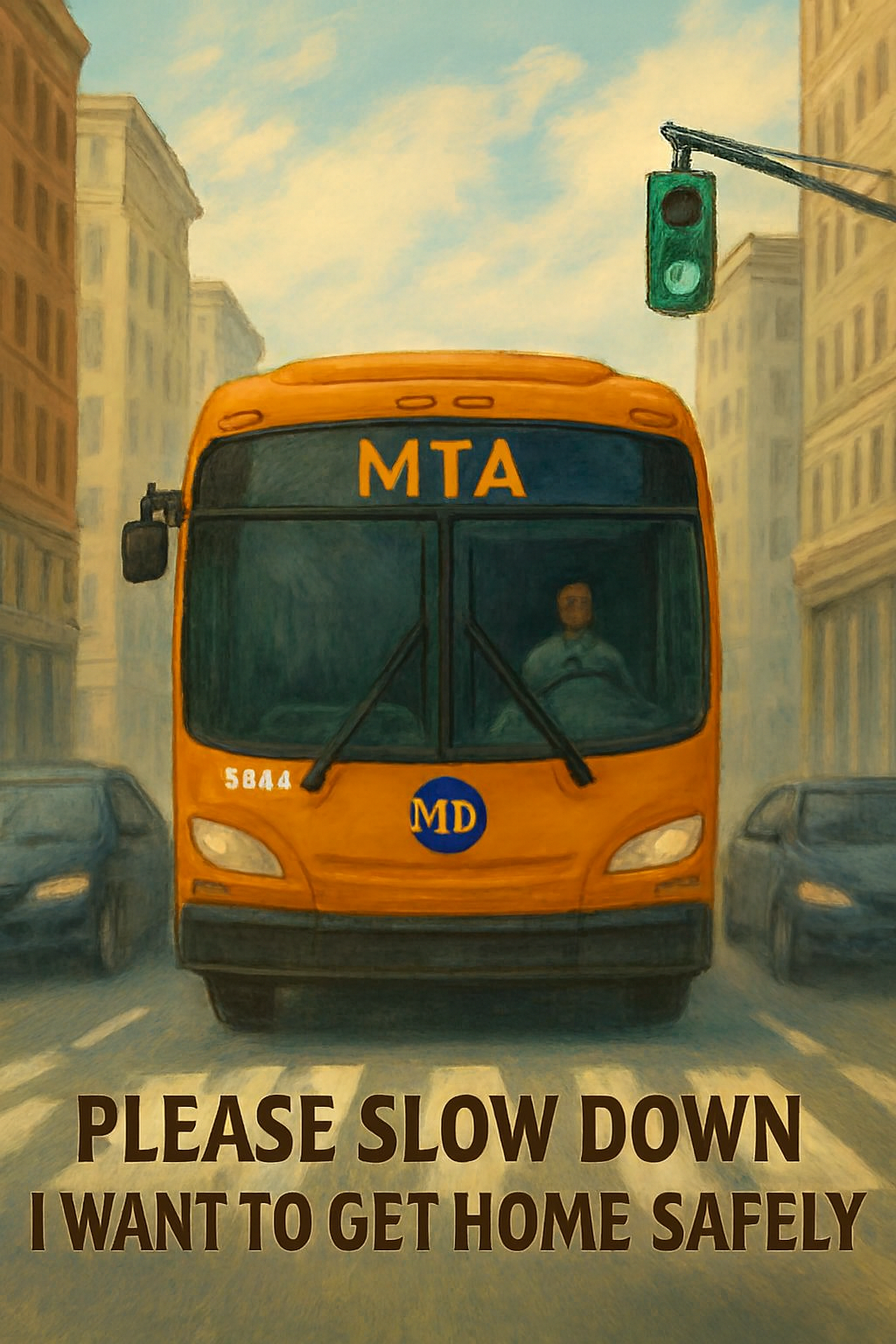
The MTA Bus

Mia eased her car onto the road that morning, the same route she’d taken for years. The sun was barely up, painting the sky in soft pinks — the kind of morning that should have felt peaceful. But peace was a luxury the roads no longer offered.

She approached the intersection just as the light turned yellow. She slowed, preparing to stop. But in her rearview mirror, she saw the familiar sight: a car racing up behind her, the driver waving his arms as if her caution was an inconvenience.

She exhaled. Here we go again.

As she came to a full stop, an MTA bus roared up from the opposite direction. Instead of slowing, it lunged forward, swaying dangerously as the driver tried to beat the red light. For a split second, the entire bus tilted — a massive metal beast balancing on the edge of disaster. Oncoming cars slammed their brakes. A woman on the sidewalk covered her mouth.

Then the bus thudded back onto all four wheels and sped through the intersection as if nothing had happened.

Mia sat frozen, her hands gripping the wheel. Not because she was surprised — but because she wasn’t.

She thought of the people on that bus. The driver. The passengers. The families are waiting for them. And she wondered, When did we stop caring about each other? When did getting somewhere fast become more important than getting there alive?

She continued her drive, taking the backroads she’d memorized like a survival map. The trees lining the route whispered in the wind, offering a calm that the highways no longer could. As she drove, she imagined every car she passed as someone’s child, someone’s spouse, someone’s parent. It made her slow down. It made her breathe differently. It made her drive with intention.

At the grocery store, she sat for a moment before getting out. Maybe the real danger isn’t the traffic, she thought. Maybe it’s the mindset behind it — the forgetting that we belong to one another.

She closed her eyes and whispered a quiet prayer — not just for herself, but for every stranger she’d meet on the road that day.

On the way home, she noticed something small but powerful: a driver who actually slowed down to let someone merge, another who stopped fully at a stop sign. A pedestrian waved thank you.

Tiny gestures. Barely noticeable. But they reminded her that change doesn’t begin with the masses. It begins with one person deciding that life — every life — is worth honoring.

As she pulled into her driveway, she realized the truth: The biggest challenge ahead wasn’t the chaos on the roads. It was choosing, every day, to be the kind of person who refuses to add to it.

And maybe, just maybe, that choice could start a chain reaction.

Posted in Uncategorized | Tagged , , , , , , , , , , | Leave a comment

Words I Would Express To My Younger Self

Hey… come here for a moment. I want to tell you something I wish you had heard sooner.

You don’t have to hold everything inside. Those feelings you’ve been carrying—those quiet hurts, those unspoken fears—they’re not meant to live in the dark. You deserve to be seen. You deserve to be heard.

I know you learned to stay silent because you thought no one would understand. I know you believed that keeping everything inside made you strong. But strength isn’t silence. Strength is letting someone in.

When you speak your truth, even if your voice shakes, something powerful happens: Your soul begins to breathe again. Your burdens loosen their grip. Your heart remembers it was never meant to carry everything alone.

Listen to me. If you don’t speak, people can’t hear you. If you don’t reach out, they won’t know you’re there. Your pain doesn’t make you invisible—but silence can.

You don’t have to be afraid of reaching out. The moment you touch another human being with your honesty, fear begins to dissolve. You grow stronger. You grow braver. Your voice becomes a light—not just for you, but for others who are struggling in the dark.

You don’t have to suffer in silence. You don’t have to prolong your healing. You don’t have to pretend you’re fine when you’re hurting.

Tell someone. Share the truth of what’s happening inside you. Let someone else hear the things you’ve been whispering only to yourself.

And if the first person doesn’t understand, try again. And if the second person can’t hold it, try again. Keep speaking until someone hears you, sees you, and cares enough to stand with you.

You are not a burden. You are not alone. You are worthy of support, worthy of healing, worthy of love.

And one day—you’ll look back and realize that every time you reached out, every time you spoke up, every time you refused to disappear—you were building the courage, confidence, and fortitude that would carry you into the life you were meant to live.

I’m proud of you. I always have been. And I’m right here with you, every step of the way.

Posted in Uncategorized | Tagged , , , , , , | 2 Comments

What Bores Me

I’ve learned something honest about myself: I’m not bored because I lack curiosity or imagination. I’m bored because the world around me often feels too small for the size of my mind and spirit.

I move through rooms where people talk to fill the silence, and I feel myself drifting. Words without meaning don’t hold me. Conversations that skim the surface leave me untouched. I crave depth — the kind of exchange where something shifts, where something is learned, where something is felt.

Repetition wears on me, too. The same streets. The same stores. The same predictable routines. I’ve walked them, understood them, and outgrown them. There’s no mystery there, no spark, no invitation to stretch.

What truly bores me is the absence of wonder — the absence of something that challenges me mentally, spiritually, or creatively. I don’t need noise or chaos. I need something that wakes up the parts of me that refuse to settle for the mundane.

And here’s the truth beneath it all:

I’m not bored with life. I’m bored with the limits of what I’ve already mastered.

My spirit wants novelty, intrigue, discovery, and the extraordinary — not because I’m restless, but because I’m built for more than the ordinary rhythms most people accept without question.

My boredom isn’t emptiness.

It’s potential — untapped, waiting, alive — looking for a worthy challenge.

Posted in Uncategorized | Tagged , , | 5 Comments

Part 2—The Quiet One in the Room

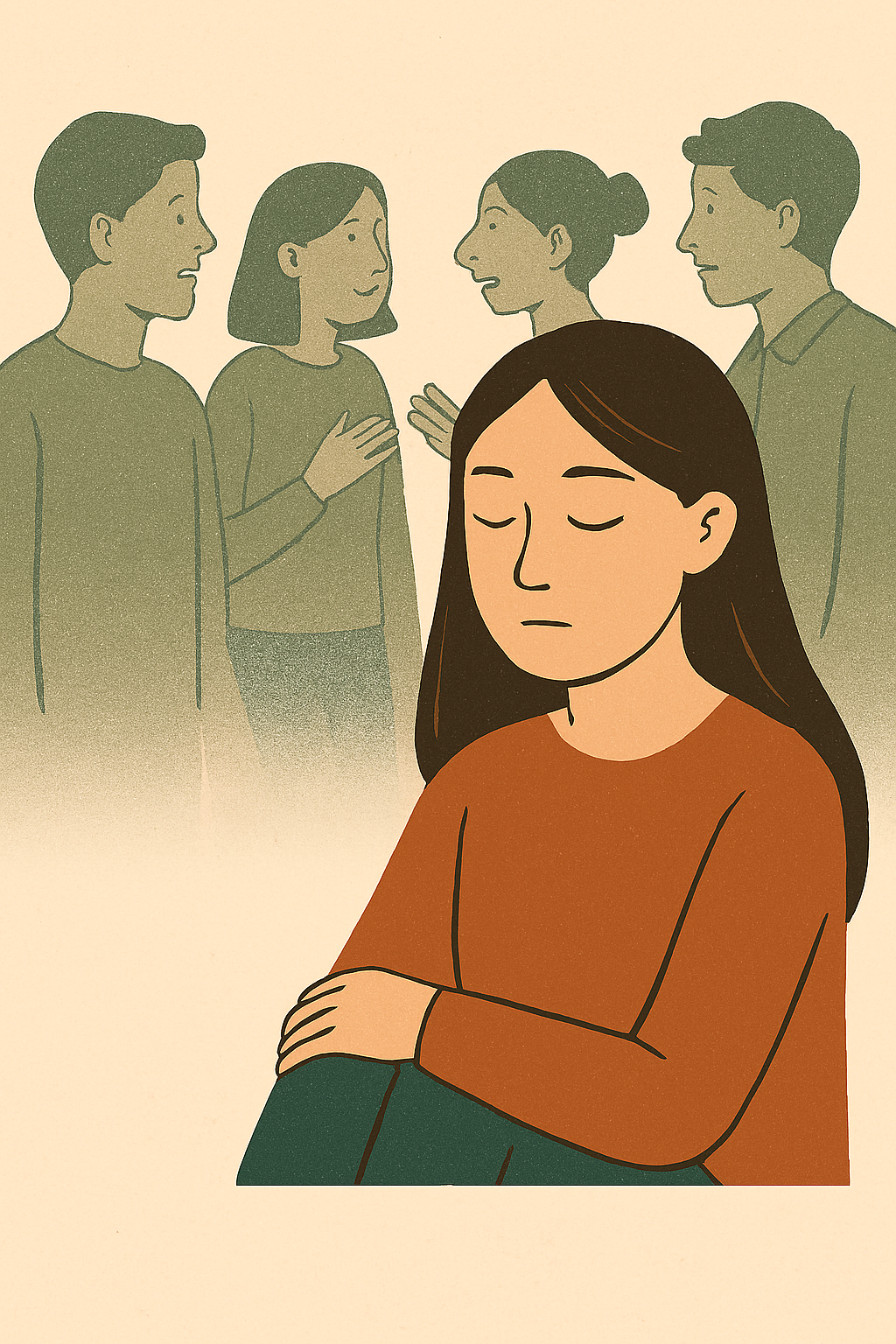
Her name was Sandra. She was the kind of person who didn’t speak unless she had something meaningful to say. In a world that rewarded volume and visibility, Sandra moved like a whisper — thoughtful, observant, and deeply present.

At school, she was often mistaken for shy. Teachers would encourage her to “speak up more,” classmates would ask, “Why are you so quiet?” But Sandra wasn’t afraid. She didn’t enjoy noise for noise’s sake. She preferred depth over chatter, truth over performance.

She noticed things others missed — the way someone’s eyes dimmed when they felt left out, the tension in a friend’s voice before they said they were “fine.” Saundra’s silence wasn’t emptiness; it was full of awareness.

But being an introvert in a world of extroverts wasn’t easy.

Group projects drained her. Social events felt like marathons. She needed time alone to recharge, but people often took her solitude personally. “Are you mad?” they’d ask. “Did I do something wrong?” No — she just needed space to breathe.

Sandra often felt like she had to pretend. Smile more. Talk faster. Be louder. But every time she tried to fit in, she felt like she was losing herself. So she began to honor her nature instead.

She found peace in quiet corners, strength in journaling, joy in one-on-one conversations. She built deep friendships with people who understood her rhythm — those who didn’t rush her, who saw her silence as sacred, not strange.

And slowly, Sandra began to realize: her introversion wasn’t a flaw. It was a gift.

She was the calm in the storm—the listener in a world of talkers. The thinker in a rush of reactions. She didn’t need to be the loudest voice to make an impact. Her presence spoke volumes.


Posted in Uncategorized | Tagged , , , | 1 Comment

 Part 1— A Window Into the Introvert’s World  

Being an introvert isn’t about being shy, antisocial, or uninterested in people. At its core, introversion is simply a natural way of moving through the world. Introverts draw their energy from solitude, quiet reflection, and meaningful inner life. They think before they speak, observe before they act, and feel most grounded when they have space to breathe, process, and just be.

But living as an introvert in a world built for extroverts can feel like swimming upstream.

A World That Moves Too Loud, Too Fast

Modern culture often celebrates the bold, the outgoing, the constantly social. Extroverted traits—speaking up quickly, networking effortlessly, thriving in crowds—are treated as the “default,” the way everyone should be. For introverts, this can create a quiet but constant pressure to perform in ways that don’t feel natural.

Some of the challenges introverts face include:

  • Feeling overlooked or misunderstood Because introverts tend to process internally, people may assume they have nothing to say or aren’t interested. In reality, they’re often thinking deeply, observing, and waiting for the right moment to contribute.
  • Social environments that drain rather than energize. Crowded rooms, constant chatter, and rapid-fire interactions can feel overwhelming. Introverts aren’t avoiding people—they need time alone to recharge after being around them.
  • Being judged for preferring solitude Many introverts genuinely enjoy their own company. But society often labels solitude as loneliness, when for introverts it’s a source of strength, clarity, and creativity.
  • Pressure to “come out of their shell.” Extroverted norms can make introverts feel like they need to change who they are to be accepted—speak louder, move faster, be more visible. This pressure can be exhausting and alienating.

The Introvert’s Quiet Strength 

Despite these challenges, introverts bring extraordinary gifts to the world: depth, intuition, creativity, empathy, and the ability to listen with presence. They notice what others miss. They think before they act. They build meaningful connections rather than surface-level ones.

And most importantly, they thrive when they are allowed to be exactly who they are.

Posted in Uncategorized | Tagged , , , , , , | Leave a comment

What Makes You Happy? What Brings You Joy?

Have you ever paused to consider the difference between joy and happiness? They often feel similar, but they come from very different places. Happiness tends to rise and fall with circumstances. Joy, on the other hand, is steady, quiet, but powerful. It can live beneath sorrow, persist through struggle, and shine even when things aren’t perfect. This story offers a gentle glimpse into how joy and happiness show up differently in one woman’s life.

The Smile and the Spark

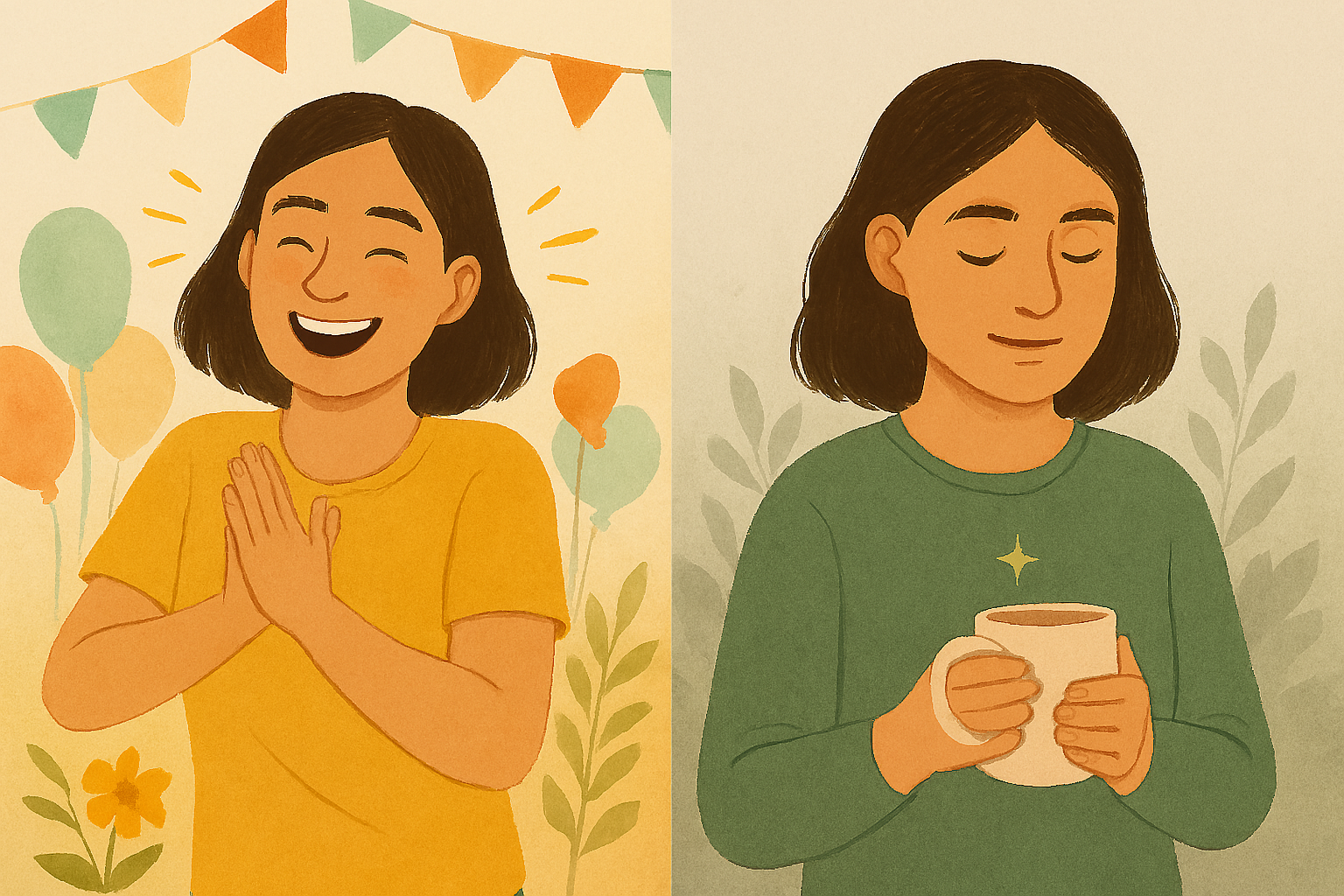
Lena was known for her bright smile. She laughed easily, celebrated birthdays with flair, and loved the thrill of spontaneous adventures. Happiness came to her like sunshine—warm, visible, and contagious. She loved it. Who wouldn’t?

But Lena also carried something deeper.

It wasn’t always visible. It didn’t depend on good news or perfect days. It was joy.

Joy lived in her bones.

She felt it when she sat quietly with her grandmother, listening to stories that made her cry and smile at the same time. She felt it when she walked through grief and still found meaning in the silence. She felt it when she helped others, not for applause, but because it felt right.

One day, after a long week, Lena sat on her porch with a cup of tea. The sky was gray. Her plans had fallen through. She wasn’t happy.

But she was still joyful.

Because joy didn’t need a reason. It was her anchor. Her quiet spark.

And that’s when she understood:

Happiness is the smile. Joy is the spark behind it.

Posted in Uncategorized | Tagged , , | Leave a comment

What Do You Love? What Is Your Passion?

Have you ever wondered about the difference between what you love to do and what you have a true passion for? Many people feel both deeply, yet struggle to separate one from the other. One brings comfort; the other, fire. One soothes, the other drives. Here’s a story that gently reveals the distinction between the two.

The Gardener and the Flame

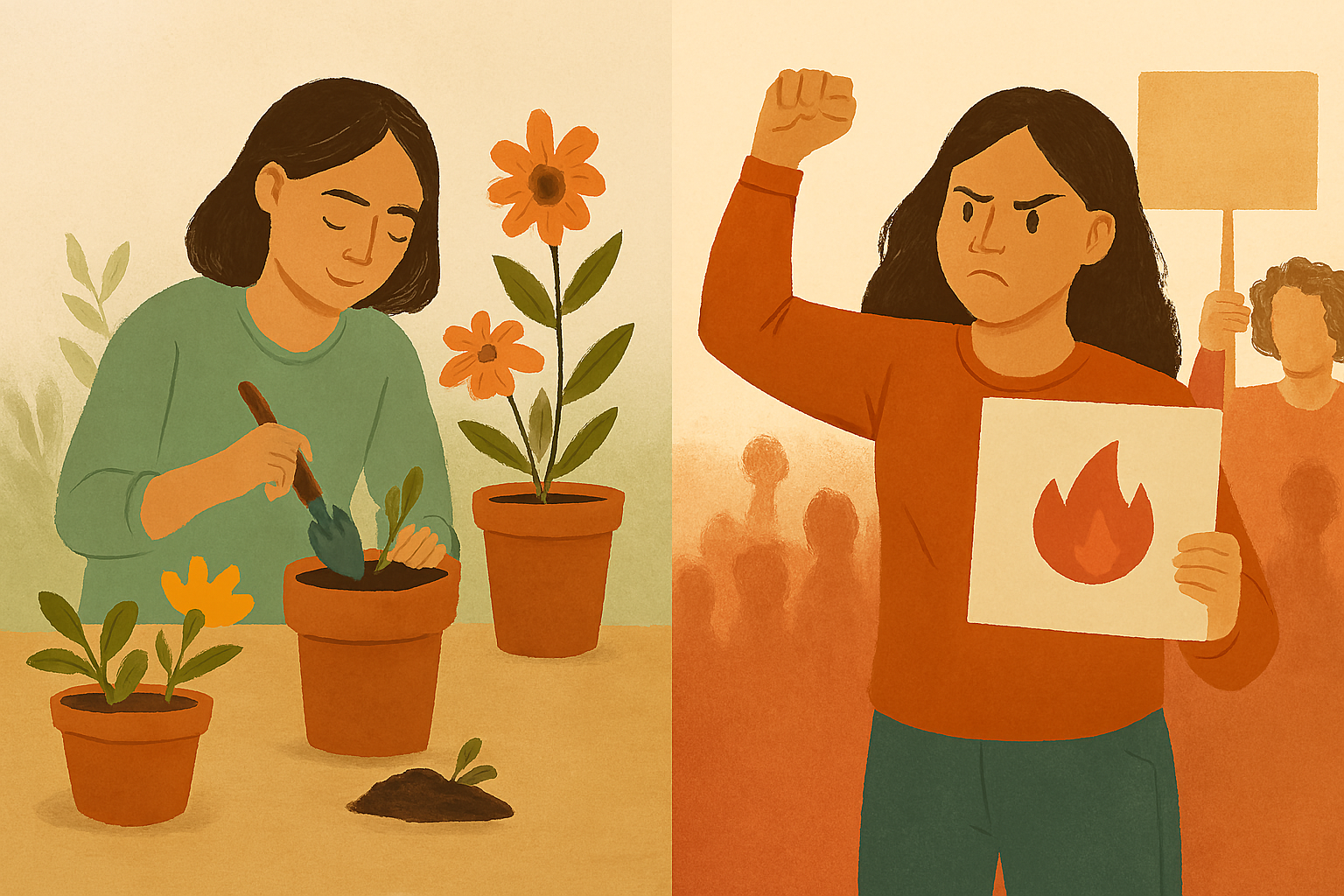
Mia loved gardening. She could spend hours tending to her plants—trimming, watering, rearranging pots, and watching the slow miracle of growth. It brought her peace. The rhythm of it soothed her. She loved the colors, the quiet, the way the soil felt between her fingers. It was her sanctuary.

But Mia’s passion was something else entirely.

Her passion was justice.

She didn’t feel the same calm when she spoke at town halls or wrote letters to lawmakers. Instead, she felt fire. Urgency. A pulse that quickened when she saw unfairness and knew she had to act. Her voice trembled sometimes, but her resolve never did. She organized petitions, mentored young activists, and stood in courtrooms beside survivors. It wasn’t peaceful—it was powerful.

One day, her neighbor asked, “If you love gardening so much, why don’t you do it full-time?”

Mia smiled. “Because gardening is what I love. But justice is what I burn for.”

Love gave her rest. Passion gave her purpose.

And in the balance between the two, Mia found her life’s rhythm—rooted in peace, driven by fire.

Posted in Uncategorized | Tagged , , , , | 3 Comments