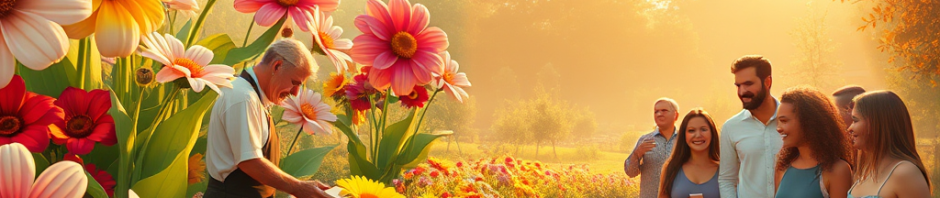
Every flower is unique. Each one needs something different — a certain amount of sunlight, a particular kind of soil, more water, less water, a gentler touch, a stronger root system. A gardener doesn’t expect a rose to behave like a lily or a wildflower to bloom like an orchid. They observe, they learn, and they care for each flower according to its nature.
Imagine if we treated people the same way.
What if we stayed truly aware of each person’s uniqueness — not just their personality, but how they think, how their mind is wired, what overwhelms them, what nourishes them, what they fear, and what helps them grow. When you approach someone the way a gardener approaches a flower — with curiosity, patience, and respect for their nature — everything changes. You stop forcing sameness. You start noticing nuance. You become more compassionate, more flexible, and more attuned to what each person needs to thrive.
And in that shift, relationships soften. Understanding deepens. People feel seen. Because at the end of the day, every person — like every flower — blooms best when cared for according to who they truly are, not who we assume they should be.
Yet as much as we long to give people the same pure, undistracted care we give to a flower, the human mind gets in the way. A flower doesn’t trigger our insecurities. It doesn’t talk back. It doesn’t remind us of past wounds. It doesn’t have needs that conflict with ours. It doesn’t misunderstand us or make us feel misunderstood. So our attention stays clean. Our presence stays steady. Our care stays simple.
With people, everything becomes more complex. Emotions enter. Interpretations enter. Old patterns enter. The mind starts protecting itself, defending itself, anticipating, reacting. Suddenly, the person in front of us becomes filtered through layers of thought, memory, fear, and expectation. The clarity we have about a flower is clouded by the noise within us.
So the question becomes: What would be needed before we could attend to people with the same clarity and presence we give to a flower?
The honest answer is simple but profound: inner stillness.
Not perfection. Not emotional neutrality. Not the absence of history. Just stillness — the ability to quiet the noise inside long enough to truly see another person.
To attend to someone the way a gardener attends to a flower, a person would need:
1. Awareness of their own inner reactions. You can’t be present to someone else if you’re lost in your own emotional storm. Awareness doesn’t eliminate emotion, but it prevents emotion from hijacking perception.
2. The ability to pause before interpreting. Most misunderstandings come from instant assumptions. Presence requires a moment of space — a breath — before the mind fills in the blanks.
3. Curiosity instead of certainty. A flower doesn’t require interpretation. A person does. Curiosity keeps the mind open instead of reactive.
4. Compassion for your own limits. You can’t offer gentle attention to someone else if you’re harsh with yourself. Self‑compassion softens the inner world so you can soften toward others.
5. A willingness to see the person as they are, not as you fear or hope they are. This is the hardest part. It requires letting go of projections, expectations, and the urge to control outcomes.
6. Emotional safety. You can only be fully present when you don’t feel threatened. Safety — internal or relational — allows attention to stay steady.
In essence, to attend to a person the way you attend to a flower, you must first cultivate the garden within yourself — a quiet mind, a steady heart, a willingness to see without rushing to interpret, and a capacity to hold space without needing to defend or explain.
When those qualities grow, even imperfectly, something beautiful happens: You begin to see people with the same clarity, tenderness, and reverence you give to a flower. Not because they are simple — but because you have become spacious enough to meet their complexity.


 freedup7