
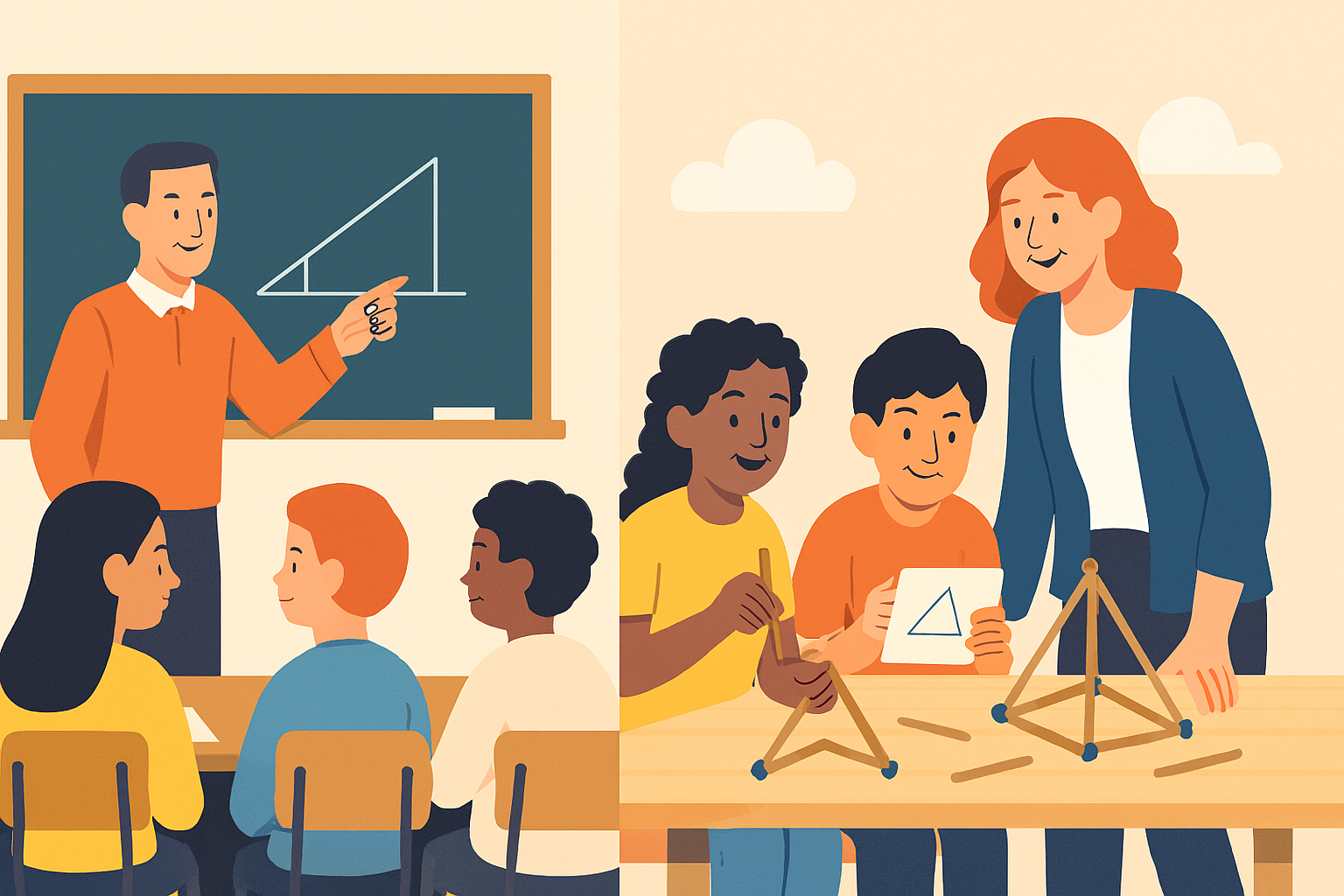
For much of my life, I believed anyone standing at the front of a classroom was simply a teacher. Teaching, as I understood it, meant giving information—pouring knowledge into students like water into empty cups. That’s how many of us grew up learning: seated in rows, eyes forward, waiting for someone to tell us what we needed to know.
In those classrooms, the teacher held the lesson plan, the curriculum, and the answers. We were expected to receive, remember, and repeat. The work was neat, predictable, and contained. We read the chapter, completed the worksheet, and circled the correct choice. And if we were asked what we thought, the question rarely reached deep enough to uncover who we were or what we could become.
Our gifts, curiosities, and natural talents were seldom invited to the surface. Some children eventually drifted toward trade schools—not because they lacked ability, but because they longed to do something real. Something that matched their hands, their minds, their passions. They wanted to become, not just memorize.
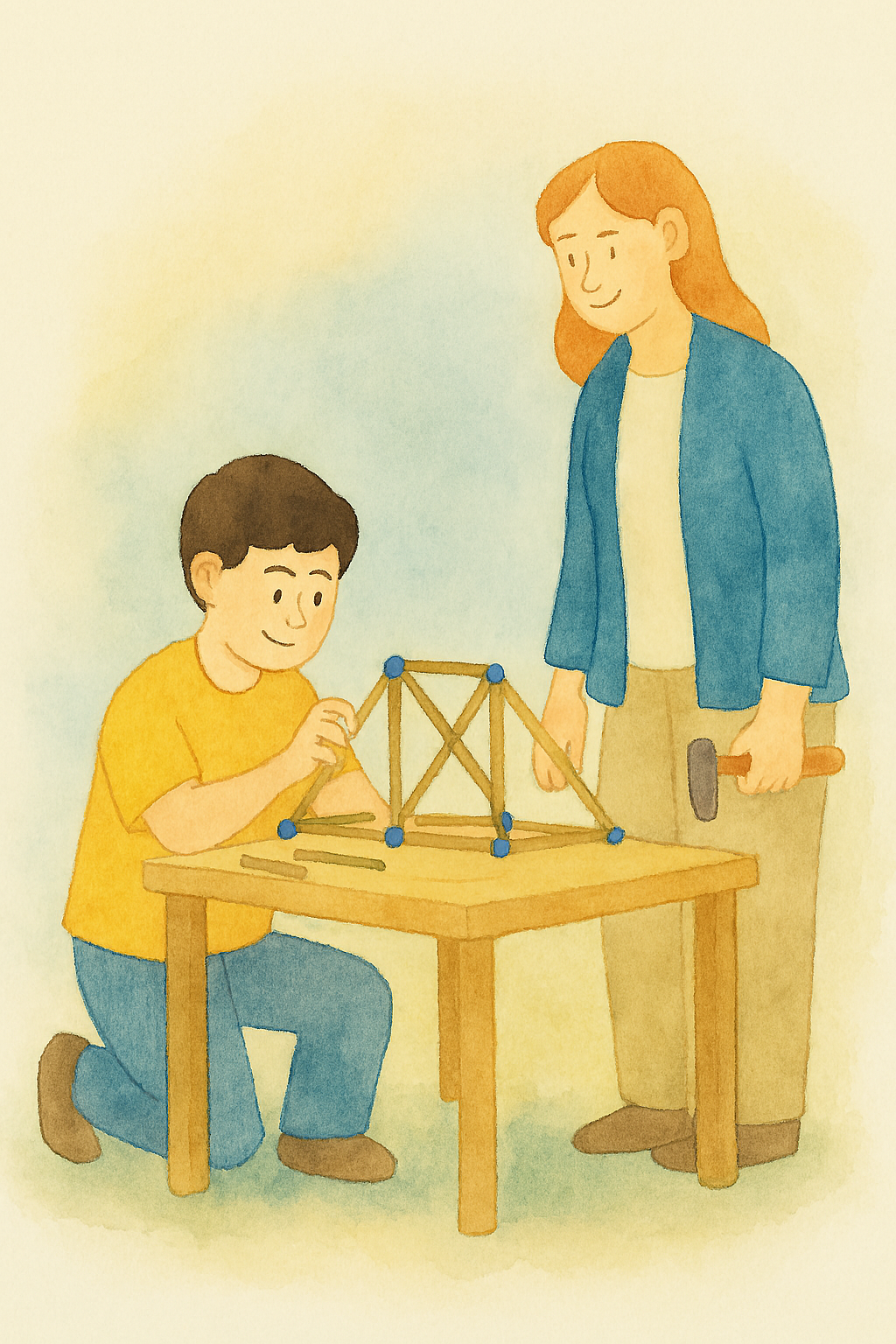
But then I encountered a different kind of guide—someone who didn’t fit the mold of “teacher” at all—a facilitator.
A facilitator doesn’t stand at the front of the room holding all the answers. They sit beside you, learning who you are, what you care about, and what you’re capable of. They don’t spoon‑feed information; they spark questions. They don’t hand you the path; they help you build it.
Instead of saying, “Here is what you need to know,” a facilitator asks, “What are you trying to create, and what do you need to get there?”
In a facilitator’s space, students don’t wait for direction—they seek it. They research, experiment, design, and revise. They learn by doing, not by repeating. The facilitator becomes a resource provider, a guide, a mirror. They notice strengths the student didn’t know they had. They notice weaknesses without shaming them. They ask the kind of questions that pull a student’s thinking upward, outward, and deeper.
The idea, the plan, the execution—those belong to the student. The facilitator helps them uncover the brilliance that was already there.
And that’s the real difference.
A teacher prepares students to answer questions. A facilitator prepares students to ask them.
A teacher fills the cup. A facilitator helps the student discover the well.
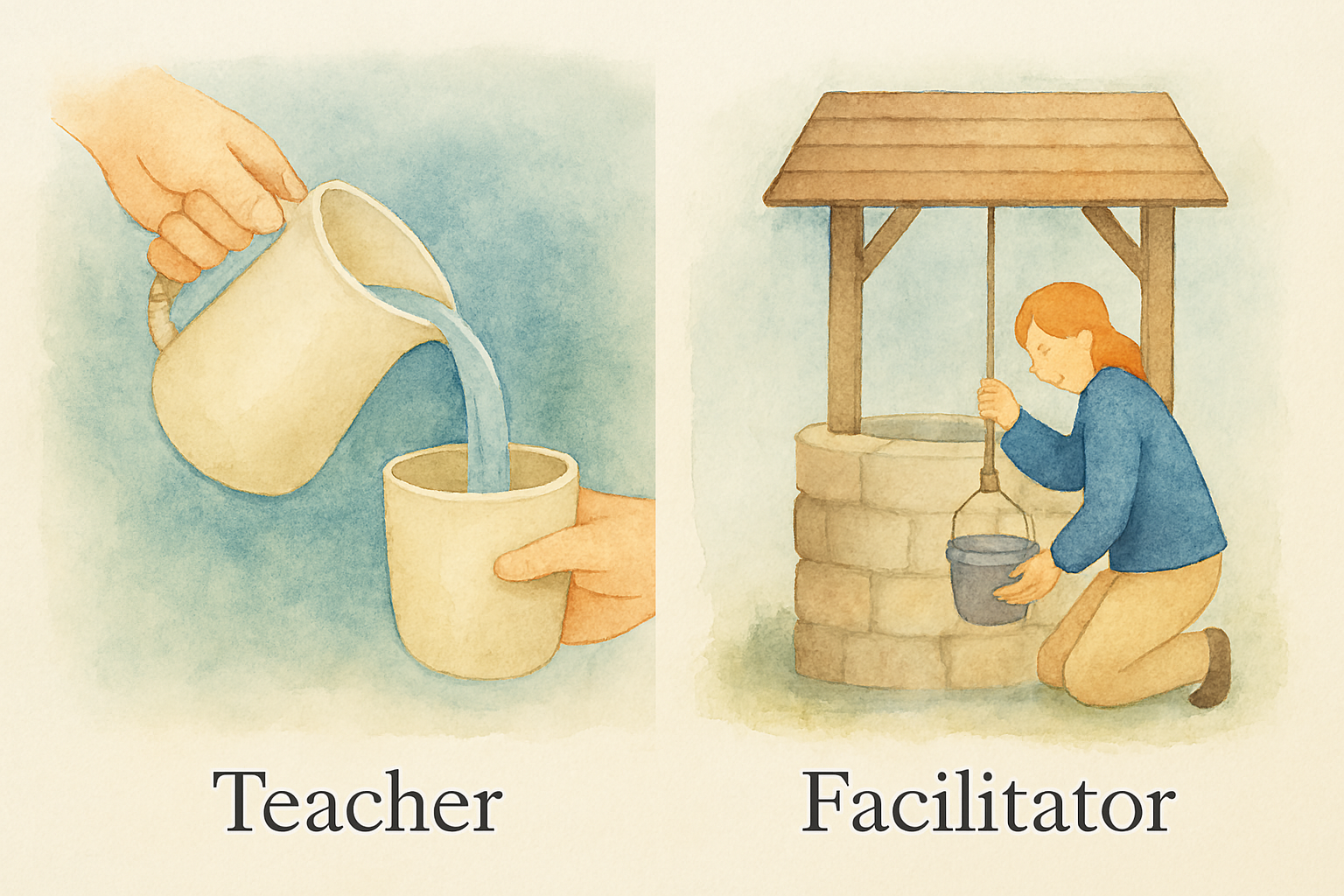
A teacher imparts knowledge. A facilitator awakens thinkers.
When facilitators guide students, they stop waiting to be told what to do. They begin to explore, question, build, and imagine. They stop being passive receivers and become active creators. They learn not just what to think, but how to think—and eventually, how to think for themselves.
In a world that desperately needs problem‑solvers, innovators, and visionaries, the facilitator’s role is not just different; it is essential. It is transformative.
In the end, the difference between a teacher and a facilitator isn’t just about method—it’s about mindset. One delivers knowledge; the other awakens it. One fills the room with answers; the other, with questions. And somewhere in that shift, students stop being taught and start becoming.
So perhaps the real question is this: In your own life—whether you’re guiding others or growing yourself—are you pouring into others, or helping them draw from within?


 freedup7
A thought provoking post… well written.